 Dorry Archiles
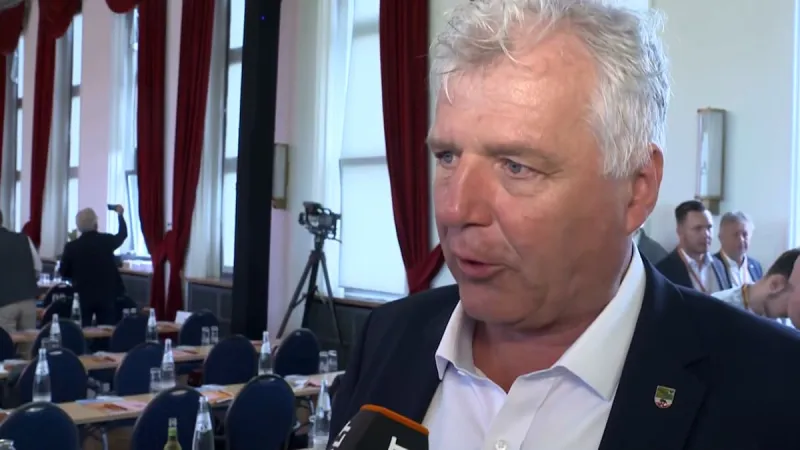
Magdeburg, Germany – A recently emerged photograph depicting Saxony-Anhalt CDU parliamentary group leader Guido Heuer in an apparently confidential exchange with AfD top candidate Ulrich Siegmund has ignited a significant political firestorm. The image has prompted accusations of blurring lines between mainstream parties and the far-right Alternative for Germany, challenging the long-standing "firewall" strategy intended to isolate the AfD from legitimate political cooperation. Heuer swiftly addressed the controversy, asserting that the interaction was misinterpreted and consistent with his faction's policy to "delineate, but not exclude" since 2016.
The visual evidence, widely circulated across German media, immediately triggered widespread commentary and criticism from across the political spectrum. Critics argue that any appearance of camaraderie or close consultation between a leading Christian Democratic Union figure and a representative of the AfD, particularly one as prominent as Siegmund, undermines democratic norms and risks legitimizing the nationalist party.
In his defense, Heuer emphasized the context of the interaction, stating, "It is different than it is portrayed. Delineate, but not exclude, that is what my faction has pursued since 2016." This statement suggests an intent to engage with the AfD on a policy level without endorsing its broader ideology or rhetoric.
The CDU, Germany's dominant center-right party, has historically maintained a strict policy of non-cooperation with the AfD, often dubbed the "firewall." This policy aims to prevent the AfD from gaining influence and respectability within the political mainstream due to its anti-immigrant stance and occasional radical rhetoric.
The photograph, however, has reignited the contentious debate surrounding the efficacy and practical application of this firewall, particularly at the state level where coalition governments can be challenging to form without broader engagement. Observers question whether such interactions, regardless of intent, inadvertently erode the very boundaries the firewall seeks to uphold.
The AfD has steadily gained traction in German state parliaments and the Bundestag, capitalizing on voter discontent, particularly in eastern German states like Saxony-Anhalt. Its increasing electoral success has made the strategy of complete isolation increasingly difficult for established parties to maintain without appearing unresponsive to a significant portion of the electorate.
The broader "German Firewall Debate" has been a recurrent theme in national discourse, with figures like Peer Steinbruck urging a strategic approach to the AfD's presence. As previously reported, discussions around how mainstream parties should manage the AfD de-radicalization strategy underscore the complexity of the issue.
The incident places Heuer and the Saxony-Anhalt CDU under increased scrutiny, potentially impacting their standing within the national party and their relationships with other coalition partners. Maintaining party discipline regarding the AfD remains a critical test for CDU leader Friedrich Merz.
While Siegmund has not offered an extensive public statement on the photo, its circulation serves the AfD's narrative of being unfairly ostracized by the political establishment, even as it seeks to project an image of legitimacy and readiness for governance.
Public reaction to the photograph has been sharply divided. While some condemned Heuer's apparent rapprochement with the AfD, others expressed understanding for the need for political dialogue, even with opposition parties, particularly in parliamentary settings where interactions are unavoidable.
The controversy highlights the persistent dilemma faced by Germany's traditional parties: how to confront the rise of populist and far-right movements without inadvertently amplifying their message or alienating their own voters. The balance between firm opposition and pragmatic engagement remains precarious.
This episode is likely to fuel further internal discussions within the CDU and across the German political landscape regarding the long-term viability and strategic effectiveness of the "firewall" as the country navigates an evolving multi-party system.