Angel Doris
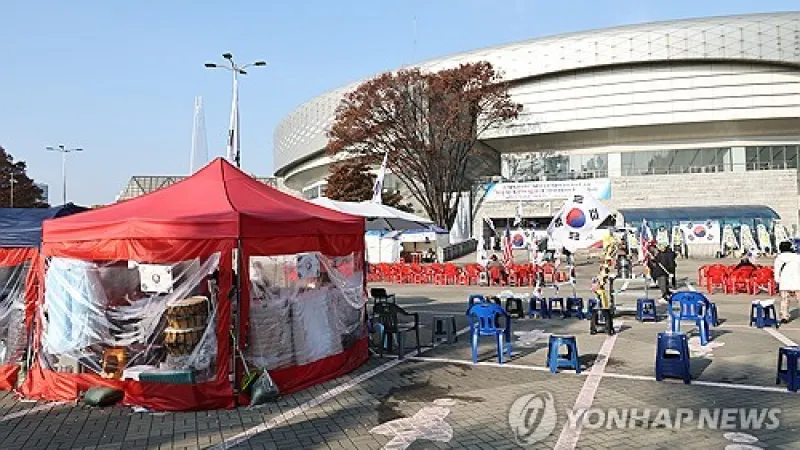
SEOUL – South Korean authorities on November 20, 2026, initiated the forceful removal of tents and other temporary structures that had comprised a long-standing ballot shortage protest encampment, effectively ending a demonstration that had persisted for 169 days in the heart of the capital. The operation marked a decisive move by municipal and law enforcement officials to clear the site, which had become a focal point of public discontent regarding electoral processes.
The protest, rooted in claims of a significant ballot shortage during a recent electoral event, began over five months ago. Participants had maintained a continuous presence, setting up makeshift shelters and banners to draw attention to their grievances and demand accountability from electoral commissions and government bodies. Their protracted vigil highlighted persistent concerns over transparency and integrity in the nations democratic mechanisms.
Details surrounding the alleged ballot shortage remain contentious. While protestors assert that the scarcity of voting materials disenfranchised a substantial number of eligible voters, potentially influencing outcomes, electoral officials have largely dismissed the claims as unfounded or isolated incidents that did not compromise the overall election veracity. This fundamental disagreement fueled the prolonged occupation of the protest site.
The early morning operation involved a significant contingent of police officers and municipal workers. They systematically dismantled tents, removed banners, and cleared personal belongings, with little reported resistance from the few remaining protestors. Authorities had issued multiple warnings for voluntary disbandment prior to the forceful intervention, citing public order and safety concerns.
A spokesperson for the Seoul Metropolitan Government, who requested anonymity due to the sensitivity of the operation, stated that the removal was undertaken as a last resort. "The protest had exceeded permissible durations for public assemblies and was beginning to impede civic infrastructure and daily life," the spokesperson conveyed, emphasizing that dialogue attempts had reached an impasse. The city maintained that the initial concerns had been adequately addressed through official channels.
Remaining protestors voiced their dismay over the authorities methods. One protestor, identified only as Mr. Kim, who had been part of the vigil since its inception, expressed profound disappointment. "Our voices have been silenced, not heard," Mr. Kim stated. "This is not how a democracy should treat its citizens who are simply asking for fair elections." Their demands for a thorough, independent investigation into the alleged ballot irregularities remain unmet.
Legal experts observe that while freedom of assembly is a fundamental right in South Korea, authorities often invoke regulations concerning public space occupation and extended demonstrations to manage and eventually disperse protests. The 169-day duration tested the limits of permissible public protest, prompting the eventual official intervention.
South Korea has a vibrant history of public demonstrations, ranging from student movements to large-scale civic actions that have shaped its modern political landscape. Prolonged protests, while not uncommon, often face escalating pressure from authorities to disband, especially when they occupy central public spaces for extended periods. This incident adds to a lineage of confrontations between state power and citizen activism.
The clearance operation is likely to elicit mixed reactions from the public. While some citizens may welcome the return of normalcy to the affected area, others might view it as an infringement on the right to protest and an authoritarian response to legitimate grievances. The resolution of the ballot shortage protest leaves underlying questions about electoral integrity unanswered for a segment of the population.
The incident occurs within a broader political climate in South Korea characterized by various societal tensions. Recently, President Lee greenlighted special counsel law amidst political tensions, showcasing a period of heightened scrutiny and political maneuvering. The government continues to navigate public demands for transparency and accountability across multiple sectors.
As the physical remnants of the protest are cleared, the issues that sparked the 169-day vigil persist in public discourse, underscoring the ongoing challenge of ensuring electoral confidence and fostering robust democratic participation.