 Dodi Irawan
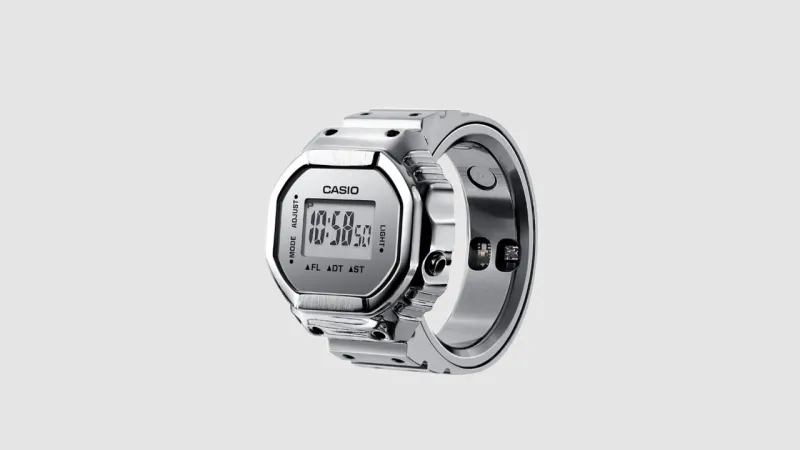
The unassuming finger has emerged as the latest battleground for technological innovation, as smart rings rapidly transcend their initial roles to become sophisticated hubs of personal data and interaction. Fueling this transformation are companies like Oura and, historically, Casio, whose miniaturization efforts paved the way for a new generation of wearable devices offering advanced functionalities far beyond mere timekeeping. This shift signals a significant evolution in how individuals interact with their digital lives, embedding high-tech capabilities into an everyday accessory.
Once primarily associated with basic fitness tracking or notification alerts, today's smart rings integrate an array of sensors capable of monitoring vital health metrics, facilitating secure payments, and even controlling smart home devices. The burgeoning market reflects a consumer demand for discreet yet powerful technology that seamlessly blends into daily routines without the bulk of larger wearables.
Oura, a prominent player in the smart ring sector, exemplifies this advancement. Its flagship product, the Oura Ring, meticulously tracks sleep patterns, heart rate variability, body temperature, and activity levels, providing users with personalized insights into their well-being. This data-driven approach positions the finger as a prime location for continuous, unobtrusive biometric collection.
The journey towards such compact technology has roots in pioneering efforts by companies like Casio. While not directly producing smart rings in the contemporary sense, Casio's legacy of miniaturizing complex electronics, notably with its calculator watches and early digital timepieces, laid foundational groundwork. This historical precedent demonstrates a consistent industry drive to shrink powerful technology into smaller, more wearable forms.
Beyond health and wellness, the utility of smart rings is expanding into transactional and security domains. Several newer models incorporate NFC chips, allowing users to make contactless payments with a simple gesture. This integration offers a compelling alternative to fumbling for wallets or smartphones, enhancing convenience and discretion in commercial transactions.
Furthermore, some smart rings are now being developed with advanced authentication features. These devices could potentially replace traditional keys or passwords, offering biometric or gesture-based access to homes, vehicles, or digital accounts. Such innovations promise a future where personal identification and access are seamlessly integrated into an item worn daily.
The market for smart rings is witnessing substantial growth, attracting considerable investment and research. Analysts predict continued expansion as component costs decrease and technological capabilities mature. This growth is also spurred by an increasing public acceptance of wearable technology as a whole, moving beyond early adopter phases into mainstream appeal.
Despite the rapid advancements, challenges persist. Battery life remains a critical consideration for such miniature devices, requiring a delicate balance between functionality and sustained operation. Accuracy of sensor data, particularly in diverse user scenarios, is another area of ongoing refinement and development.
The aesthetic appeal also plays a pivotal role in consumer adoption. Unlike smartwatches, which often prioritize screen real estate, smart rings must blend seamlessly with traditional jewelry while housing sophisticated electronics. This necessitates innovative design and material science to create devices that are both functional and visually appealing.
Looking ahead, the potential applications for smart rings appear vast. Researchers are exploring integration with augmented reality systems, gesture control for virtual environments, and even advanced haptic feedback for communication. The finger, long adorned with decorative rings, is poised to become an indispensable interface for future interactions with the digital world.
The evolution of smart rings underscores a broader trend in technology: the drive towards invisible computing. As devices become smaller and more integrated into our physical selves, the line between technology and accessory blurs, heralding an era where computing power is always present, yet rarely intrusive.