 Edward DP Situmorang
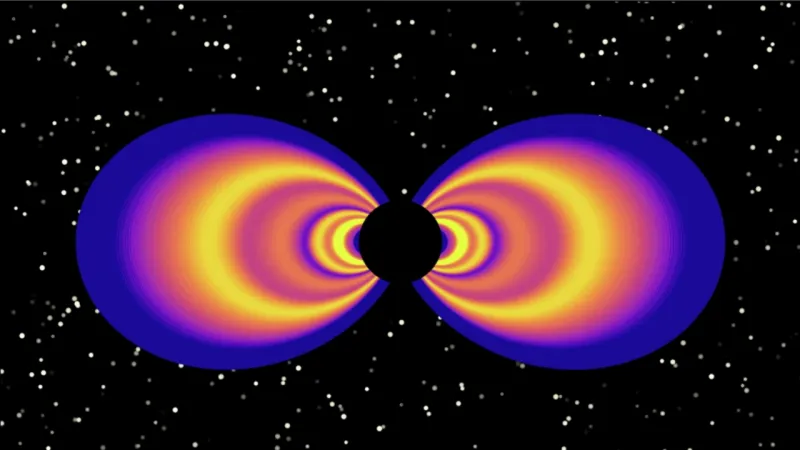
WASHINGTON – A powerful geomagnetic storm in 2024 has resulted in the discernible expansion of Earth's natural radiation belts, with scientists identifying additional high-energy particle zones orbiting the planet. This development, confirmed by space weather experts, is prompting a reevaluation of our understanding of the solar system's influence on Earth's protective magnetosphere and its long-term stability.
The 2024 event, characterized by substantial solar flares and coronal mass ejections (CMEs), sent torrents of energetic particles hurtling toward Earth. Upon impact with our planet's magnetic field, these particles triggered a severe geomagnetic storm, which was widely observed globally for its spectacular auroral displays and minor disruptions to satellite communications.
Experts in magnetospheric physics suggest that while the immediate effects of the storm were well documented, the enduring alteration to the radiation belts presents a novel observational challenge. A leading space physicist, who requested anonymity to discuss ongoing research, stated, "We are now seeing clear evidence that the energy from that 2024 storm was sufficient not just to perturb existing belts but to structure new, temporary, or even semi-permanent features."
Earth's radiation belts, primarily the inner and outer Van Allen belts, are toroidal regions of energetic charged particles, mostly electrons and protons, which are trapped by the planet's magnetic field. These belts play a crucial role in shielding Earth from harmful cosmic radiation, but their intensity can fluctuate dramatically in response to solar activity.
The recently identified extra bands of radiation are distinct from the well-established Van Allen belts, exhibiting unique energy signatures and orbital dynamics. Initial analyses indicate these new regions are composed primarily of high-energy electrons, trapped and accelerated by the intense electromagnetic disturbances that followed the 2024 geomagnetic storm.
The concept that such phenomena could occur is not entirely new to theoretical models, but direct observation of these extra belts has been sporadic. One veteran astrophysicist commented, "It is entirely probable that similar formations have occurred in the past, perhaps even frequently, but went largely undetected due to limitations in our satellite instrumentation and monitoring capabilities at the time."
The presence of these augmented radiation zones carries significant implications for space-faring missions and satellite operations. Satellites orbiting within or transiting these newly invigorated regions could face increased exposure to damaging radiation, potentially affecting onboard electronics, reducing operational lifespans, and requiring enhanced shielding protocols for future spacecraft designs.
While not as extreme as the Carrington Event of 1859, which caused global telegraph system failures, the 2024 geomagnetic storm ranks among the most significant space weather events of recent decades. Its lasting impact on the radiation belts underscores the evolving understanding of our near-Earth space environment.
Researchers are now leveraging an array of satellite data, including observations from NASA and European Space Agency missions, to precisely map the morphology and particle composition of these new belts. Continuous monitoring is crucial to understand their longevity and potential variations.
This ongoing discovery highlights the dynamic nature of space weather and its profound, albeit often invisible, effects on Earth. As humanity becomes increasingly reliant on space-based technology, a deeper comprehension of geomagnetic storms and their consequences, such as expanded radiation belts, becomes paramount for ensuring the resilience of our technological infrastructure.