 Angela Stefani
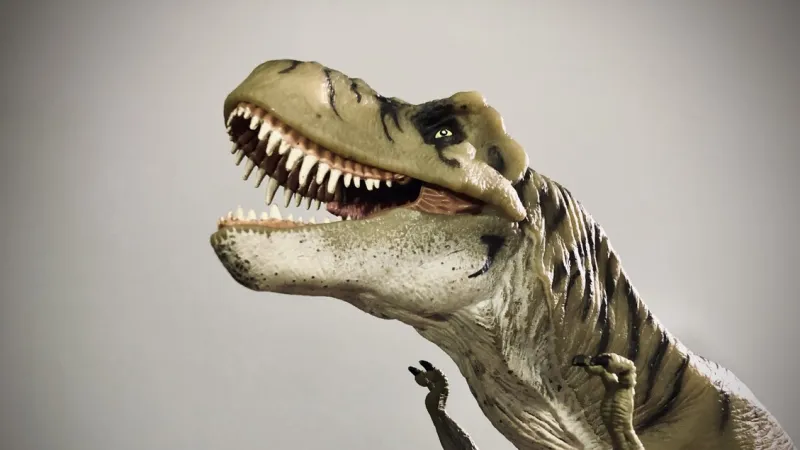
A compelling new theory challenges long-held assumptions about the Tyrannosaurus rex, proposing that its notoriously short arms were not an evolutionary anomaly or a vestigial feature, but rather a specialized adaptation crucial to its predatory success. Scientists suggest these seemingly diminutive limbs enabled a more effective, head-first hunting strategy, facilitating the capture of larger, more formidable prey.
For decades, the T. rex's disproportionately small forelimbs have puzzled paleontologists, often leading to humorous speculation or interpretations as a relic of its evolutionary past with no functional purpose. This new research pivots from that perspective, positing a direct and vital role for the arms in the apex predator’s life.
The core of the hypothesis centers on the reduction of the arms as a mechanism to minimize risk during the chaotic, brutal act of feeding. When multiple T. rex individuals, or even a single one, engaged in tearing apart a large carcass, the powerful jaws and massive skulls were the primary tools. In such scenarios, longer, more exposed arms would have been highly vulnerable to accidental injury from a thrashing prey animal or even from the jaws of a fellow predator vying for a share.
By evolving shorter arms, the T. rex effectively eliminated a potential liability. This anatomical feature allowed the massive theropod to commit its formidable head and neck muscles entirely to the kill and subsequent consumption, reducing the chances of its limbs being bitten off or broken during a violent struggle for food.
The evolutionary pressure for this adaptation likely stemmed from the T. rex's niche as a hunter of gigantic herbivores. Confronting armored sauropods or formidable horned dinosaurs required an unparalleled offensive capability centered on crushing bone and flesh with its jaws, rather than grasping or manipulating prey with its forelimbs.
Consequently, the same evolutionary pathway that shortened the arms simultaneously favored the development of an extraordinarily robust skull, immense jaw muscles, and powerful neck musculature. These features collectively transformed the T. rex's head into the ultimate weapon, capable of exerting bite forces unmatched by almost any other terrestrial predator in Earth's history.
This revised understanding underscores a sophisticated predatory specialization. Instead of viewing the short arms as a design flaw, the new theory recasts them as an integral component of a highly efficient killing machine, optimized for delivering devastating, bone-shattering bites.
Paleontological evidence increasingly supports the notion that the T. rex often engaged in head-first attacks, using its immense skull as a battering ram and its teeth as lethal shearing implements. The absence of long, interfering forelimbs would have streamlined this devastating approach.
The implications of this research extend beyond mere anatomical description, offering deeper insights into the behavior, social dynamics, and ecological role of Tyrannosaurus rex. It paints a picture of a creature perfectly sculpted by millions of years of evolution to dominate its ecosystem, with every feature, including its previously misunderstood short arms, serving a precise predatory function.
This paradigm shift encourages scientists to reconsider other seemingly odd or vestigial features in ancient animals, suggesting that what appears rudimentary might, in fact, be a highly evolved specialization perfectly suited for a specific environmental or behavioral context.
Further research, combining biomechanical modeling with fossil analysis, will continue to test this intriguing hypothesis, deepening our appreciation for the intricate evolutionary pathways that shaped Earth's most iconic predators.