 Chandra Wijayanto
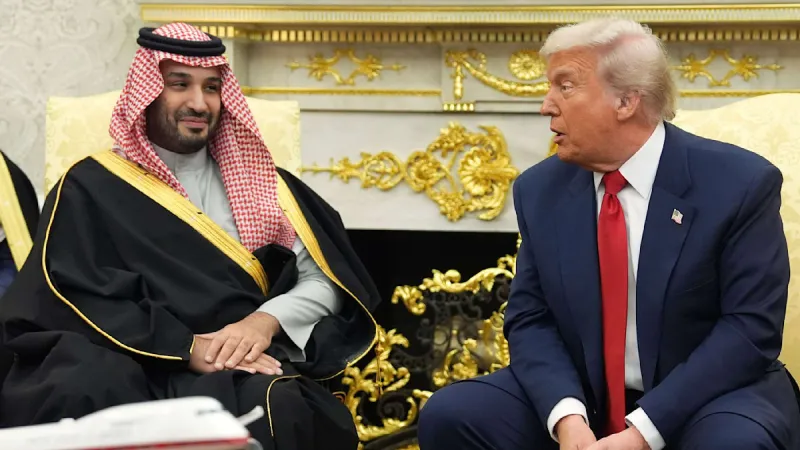
WASHINGTON, D.C. The United States and Saudi Arabia have formally cemented a groundbreaking agreement to establish a civilian nuclear program within the Kingdom, a development that immediately ignited a firestorm of criticism from global non-proliferation advocates and lawmakers who warn of its potential misuse for developing atomic weapons. The pact, a signature foreign policy initiative of President Donald Trump's administration, aims to empower Saudi Arabia with nuclear energy capabilities while simultaneously drawing profound security concerns regarding regional stability.
The landmark accord, finalized after protracted negotiations, outlines the framework for American companies to contribute to Saudi Arabia's burgeoning energy sector through peaceful nuclear technology. Proponents argue the initiative will foster economic diversification and reduce the Kingdom's reliance on fossil fuels, aligning with global climate objectives and Saudi Vision 2030.
However, the agreement arrives fraught with significant geopolitical ramifications. Critics, including a bipartisan chorus in Congress and numerous international watchdog organizations, voice grave apprehension that Riyadh could leverage the technology to pursue a nuclear weapons program, thereby destabilizing an already volatile region. This concern is amplified by Saudi Arabia's historical stance of reserving the right to match Iran's nuclear capabilities, should Tehran ever acquire such an arsenal.
President Donald Trump's administration has steadfastly defended the deal, asserting that it includes robust safeguards designed to prevent proliferation. Administration officials emphasize that the partnership is critical for bolstering US strategic interests in the Middle East and countering the growing influence of adversaries. The agreement is presented as a crucial component of a broader regional security architecture.
Non-proliferation experts, however, contend that the safeguards are insufficient or could be circumvented. They point to the absence of a gold standard agreement, which typically includes a commitment by the recipient nation to forgo domestic enrichment of uranium or reprocessing of spent fuel, two pathways to nuclear weapons material. Riyadh has reportedly resisted such stringent conditions, complicating efforts to alleviate global anxieties.
Concerns about regional arms races are particularly acute. Should Saudi Arabia gain the capacity for uranium enrichment or plutonium reprocessing, neighboring states might feel compelled to follow suit, leading to an unprecedented escalation of nuclear ambitions across the Middle East. This potential arms race comes at a time when regional tensions remain high, as evidenced by reports such as US Central Command Confirms Eleventh Consecutive Night of Iran Strikes.
Officials within the Saudi government have consistently maintained their commitment to peaceful nuclear energy, underscoring the Kingdom's sovereign right to develop its energy resources. They argue that a civilian nuclear program is essential for meeting the nation's rapidly increasing electricity demands and achieving long-term energy security.
The International Atomic Energy Agency, the global nuclear watchdog, will play a pivotal role in monitoring the implementation of the agreement and ensuring compliance with non-proliferation treaties. However, the agency's oversight capacity often relies on the transparency and cooperation of member states, which some critics fear could be limited in this context.
Domestic political opposition in the United States has focused on the potential for the deal to undermine global non-proliferation efforts, a cornerstone of international security policy for decades. Lawmakers have called for greater congressional oversight and more stringent conditions to be attached to any nuclear technology transfer.
Looking ahead, the long-term implications of this agreement for regional power dynamics and the future of nuclear non-proliferation remain a subject of intense debate. While the Trump administration hails the pact as a strategic success, the international community continues to grapple with the delicate balance between energy independence and the pervasive specter of nuclear proliferation in one of the world's most critical geopolitical theaters.