 Debby Wijaya
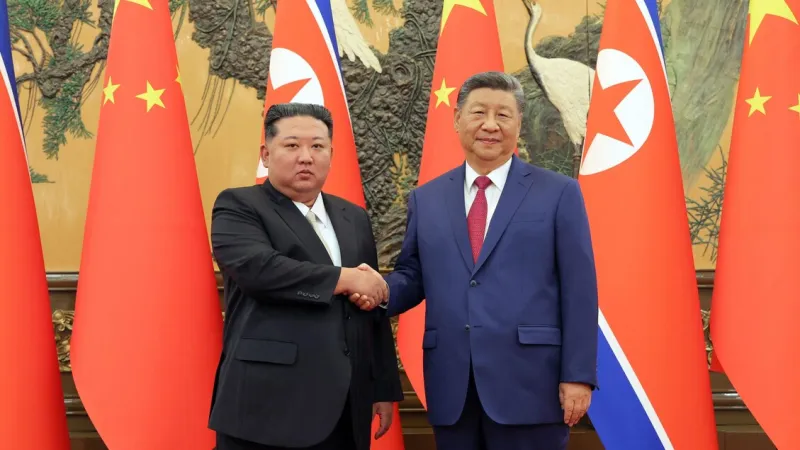
Chinese President Xi Jinping is poised to embark on an official state visit to Pyongyang, North Korea, where he will hold crucial talks with supreme leader Kim Jong Un. The highly anticipated meeting follows President Xi's public commendation of an "invincible friendship" between Beijing and Pyongyang, underscoring a deepening alliance amid shifting global dynamics and persistent international scrutiny of the reclusive nation's nuclear ambitions.
The declaration of an "invincible friendship" by President Xi signals Beijing's unwavering support for North Korea, a steadfast communist ally since the Korean War. This rhetoric reinforces a historical bond that has periodically seen strains but consistently returns to a posture of mutual strategic alignment, especially when confronted with external pressures.
The visit, whose exact dates remain under wraps but is understood to be imminent, comes at a pivotal time for both nations. For North Korea, it represents a crucial endorsement from its primary economic partner and diplomatic protector on the international stage. For China, it provides an opportunity to solidify regional influence and potentially counterbalance Western-led efforts to isolate Pyongyang.
The relationship between China and North Korea has deep roots, forged through shared ideological principles and a history of military cooperation. China has long served as North Korea's largest trading partner and a vital source of aid, acting as a buffer against more stringent international sanctions, particularly those imposed by the United Nations Security Council.
Observers note that the strengthened China-DPRK bond carries significant geopolitical weight, especially for the administration of President Donald Trump. While President Trump has engaged in high-stakes diplomacy with Kim Jong Un in the past, progress on denuclearization has remained elusive, making Beijing's influence a critical variable in any future negotiations.
Regional stability is a primary concern for Seoul and Tokyo. A more emboldened North Korea, backed by China, could lead to renewed tensions on the Korean Peninsula and complicate efforts by South Korea and Japan to foster peace and security in the Indo-Pacific.
Economically, the visit could pave the way for increased bilateral trade and investment, offering a lifeline to North Korea's struggling economy. While Beijing officially adheres to UN sanctions, its enforcement has often been seen as nuanced, allowing for a degree of commerce crucial for Pyongyang's survival.
The ongoing development of North Korea's nuclear weapons program remains a contentious issue globally. China's strategic calculus involves balancing its historical alliance with Pyongyang against its interest in preventing full-scale nuclear proliferation, an issue highlighted by concerns surrounding Operational Nuclear Warheads Rise, Fueling New Arms Race Fears.
This upcoming summit builds on a series of high-level engagements between Xi and Kim in recent years. These meetings have typically aimed at coordinating positions on critical regional and international affairs, showcasing a united front against perceived external threats.
The outcome of President Xi's visit will be closely scrutinized for any indications of new agreements on economic cooperation, security assurances, or a unified diplomatic approach regarding denuclearization talks. It reinforces the narrative that Beijing views the China-DPRK bond as a cornerstone of its regional foreign policy.
The reaffirmation of the China-DPRK bond demonstrates a strategic alignment designed to navigate an increasingly complex international landscape. Both leaders appear committed to projecting stability and strength through their enduring alliance, emphasizing a shared future vision.
Such high-profile visits and declarations of "invincible friendship" are not merely symbolic. They send clear messages to other global powers about the resilience and strategic depth of these alliances, potentially reshaping regional power dynamics.