 Chris Robert
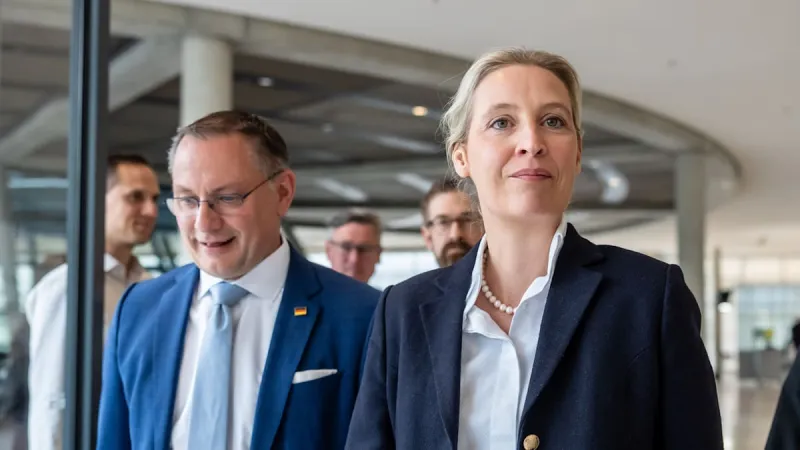
BERLIN — The Alternative for Germany (AfD) party has significantly extended its lead in national opinion polls, according to recent GMS-Sonntagsfrage and Insa-Umfrage data released this past weekend. This sustained surge places the right-wing populist party distinctly ahead of the center-right Union, signaling a notable shift in the German political landscape.
The GMS-Sonntagsfrage, a widely observed weekly poll simulating general election outcomes, indicated the AfD building on its previous gains. This sustained upward trend has drawn considerable attention from political analysts and incumbent parties alike.
Concurrently, the Insa-Umfrage, another prominent survey, corroborated the AfD's dominant position. The results from both polling institutes underscore a consistent pattern of increased support for the AfD, challenging traditional party allegiances.
Amid the escalating discourse surrounding these poll numbers, political scientist Werner Patzelt offered a cautionary perspective. Patzelt, a respected figure in German political analysis, emphasized the foundational principles of democracy in his assessment.
Patzelt articulated that the ascendance of any party within a democratic framework, even one seen as controversial by some, does not inherently signify a breakdown of the rule of law. His comments aimed to temper what he described as a potentially overreactive public response.
“In a democracy, nothing can be done against majorities,” Patzelt stated, translating his original sentiment for a broader audience. He underscored that electoral outcomes, regardless of their specific alignment, represent the will of the voting populace at a given moment.
He further advised against an emotional or panicked reaction to the poll results. “I recommend everyone not to fall into hysterical hyperventilation,” Patzelt urged, stressing the importance of rational engagement with political realities.
The AfD's continued growth reflects a complex interplay of factors, including voter disillusionment with mainstream parties, concerns over economic stability, and ongoing debates surrounding immigration policies. The party has consistently capitalized on these issues to expand its base.
The Union, comprising the CDU and CSU, traditionally Germany's dominant conservative force, now faces the urgent task of reassessing its strategy to regain lost ground. This unprecedented challenge from the far-right marks a significant moment in post-war German politics. For context on leadership within the Union, explore Merz's Strong Constitutional Hand Amid German Chancellor Speculation.
Other established parties, including the Social Democrats (SPD), Greens, and Free Democrats (FDP), are also grappling with the implications of the AfD's electoral momentum. The current political climate suggests a fragmentation of the electorate and a more volatile multi-party system. The FDP's recent internal discussions are highlighted in Kubicki Rebuffs Division, Clarifies AfD Stance After FDP Election Win.
The debate over Germany's national defense imperative, for instance, is an area where differing party stances are pronounced. The AfD often presents a more nationalistic and less interventionist foreign policy, a topic further explored in Mandatory Reservist Training: Germany Debates National Defense Imperative.
Public sentiment regarding the AfD has also spurred counter-movements, with various alliances forming to challenge the party's influence and disrupt its events, such as a recent party congress, as seen in Heidi Reichinnek Joins Alliance to Disrupt AfD Party Congress in Erfurt.
The upcoming federal elections, though still some time away in 2026, are already casting a long shadow over German political discourse. These persistent poll numbers indicate a potentially transformative period for the nation's governance.
Patzelt's remarks serve as a reminder that democratic processes, while sometimes leading to uncomfortable outcomes for certain segments of the population, are fundamentally about the will of the majority. The challenge for established parties now is to understand and adapt to these shifts.
The political scientist's call for restraint also underscores a broader concern about political polarization. He suggests that a measured, analytical approach is more conducive to maintaining civic dialogue than emotional outbursts.
As Germany navigates these evolving political currents, the performance of all parties in addressing core societal issues will be under intense scrutiny. The ability to articulate clear, credible solutions will be paramount in winning over a shifting electorate.
The implications of a strong AfD presence extend beyond domestic policy, potentially influencing Germany's role in the European Union and its stance on international affairs. This includes its approach to crises and alliances.
Observers will closely monitor how mainstream parties respond to Patzelt's counsel and the persistent AfD surge. The effectiveness of their strategies in engaging disenchanted voters will be key in shaping Germany's future political trajectory.