 Demian Sahputra
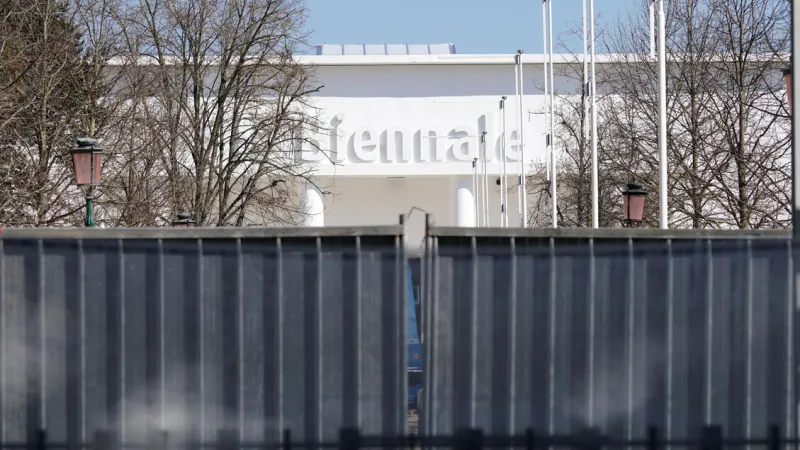
Brussels The European Union has intensified its scrutiny of the Venice Biennale, dispatching a third formal letter to the esteemed cultural institution demanding explicit clarification on Moscows official participation in its future exhibitions. This latest communication from Brussels underscores persistent concerns within the EU over the Biennales stance, particularly in light of ongoing international sanctions and the broader geopolitical landscape. The Biennale now faces a 30-day deadline to provide comprehensive responses to the unresolved issues raised by the bloc.
The repeated correspondence signals a deepening dissatisfaction among EU officials with prior explanations or commitments from the Biennale organizers. Brussels seeks absolute transparency regarding how the globally renowned art exhibition navigates the complexities of hosting or engaging with Russian entities or artists officially sanctioned or otherwise connected to the Russian state.
The EUs actions align with its steadfast foreign policy objectives, which include the economic and diplomatic isolation of the Russian government following its full-scale invasion of Ukraine. Since 2022, the bloc has implemented wide-ranging sanctions affecting various sectors, a strategy that extends to cultural exchanges perceived as state-sponsored.
The Venice Biennale, celebrated as one of the worlds most prominent contemporary art and architecture exhibitions, finds itself at a critical juncture where its artistic independence intersects with pressing geopolitical realities. Its decisions carry substantial cultural and political weight, making its platform a focal point for international debate on ethical engagement.
The issuance of a third letter signifies escalating pressure and suggests that previous communications from the Biennale were deemed insufficient or ambiguous. The European Union is not merely inquiring; it is actively seeking to understand and potentially influence the Biennales policy decisions concerning Russian involvement.
This situation presents a complex dilemma for the Biennale: how to balance its foundational principles of artistic freedom and universal cultural exchange with the prevailing international consensus against engaging with state-backed Russian institutions. The institution must weigh its mission against the potential for its platform to be perceived as legitimizing a nation under widespread sanctions.
Many cultural institutions worldwide have already taken decisive steps, either severing ties or suspending collaborations with Russian state-funded entities or artists closely aligned with the government. This collective action highlights a broader trend of cultural organizations aligning with international humanitarian and political positions.
The EUs diplomatic pressure on the Biennale is consistent with its broader strategy to ensure its foreign policy objectives are reflected across various spheres, including major cultural events. This approach also mirrors recent landmark political actions, such as when EU Opens Landmark Accession Talks with Ukraine, Moldova, further solidifying the blocs commitment to its eastern partners.
A key aspect of the EUs inquiry likely centers on the distinction between official national pavilions, which represent state-backed cultural diplomacy, and individual artists whose participation might be considered independent. The nuance in such distinctions is crucial but often challenging to define amidst political sensitivities.
The 30-day ultimatum underscores the urgency Brussels places on this matter. It indicates a clear intention from the EU to take further diplomatic or even administrative measures if its demands for explicit clarity and alignment with its broader policy framework are not met by the Biennale.
This unfolding scenario serves as a significant test case for global cultural institutions grappling with the increasing politicization of art and major international events. It raises fundamental questions about the role of culture in times of conflict and the responsibility of such platforms.
The outcome of this exchange will likely set a precedent for how other international cultural bodies navigate similar pressures, illustrating the intricate relationship between soft power, cultural diplomacy, and the enforcement of international relations policies.
The focus on the Biennale also casts a spotlight on Italys role, as the host nation of the prestigious event. Italy, an EU member state, is expected to uphold and reflect the Unions collective foreign policy stance.
Cultural events often pride themselves on transcending political divides, but the current geopolitical climate necessitates a re-evaluation of such ideals when state actors are involved. The EUs stance suggests that neutrality might not always be a viable or acceptable position.
This development follows similar debates concerning Russian participation in various sports events, scientific collaborations, and other international forums, signaling a comprehensive effort to isolate the Russian state across all sectors.
The European Union remains resolute in its commitment to supporting Ukraine and holding the Russian government accountable for its actions. This commitment extends beyond economic sanctions to the realm of cultural engagement, reflecting a holistic approach.
The world watches to see how the Biennale, a beacon of artistic expression, will respond to these formidable demands from one of the worlds most powerful political blocs. Its decision will reverberate far beyond the art world.
The integrity of cultural institutions and their ability to operate independently are at stake, yet so is their moral obligation to align with international efforts to uphold peace and human rights. This balancing act defines the current challenge.
This situation highlights how political considerations have increasingly permeated cultural arenas, forcing organizations to take explicit positions rather than maintaining traditional neutrality.