 Chandra Wijayanto
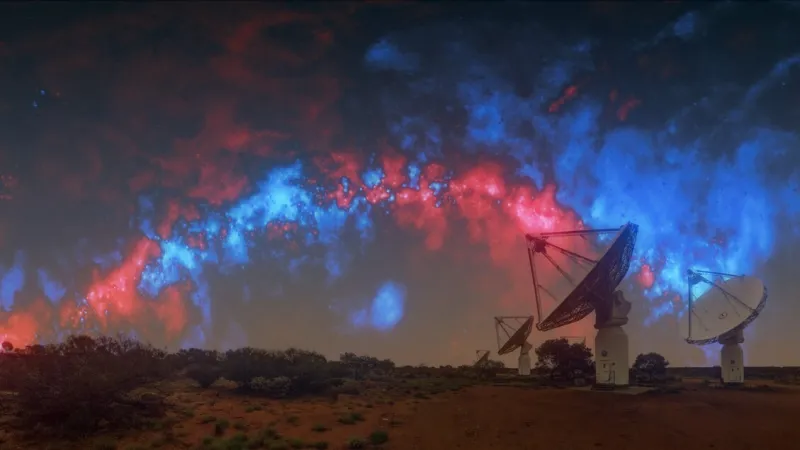
Scientists have unveiled an unprecedented map detailing cosmic magnetic fields across an astounding four million galaxies, marking a monumental leap in humanitys understanding of the universe. This groundbreaking project, substantially larger than any previous endeavor, opens vast new avenues for astrophysical research into the fundamental forces shaping the cosmos.
The newly compiled dataset is five times more expansive than all prior magnetic field maps combined, offering an unparalleled panoramic view of these elusive cosmic structures. Its sheer scale allows for the first comprehensive analysis of magnetic field behavior across immense intergalactic distances.
Magnetic fields, though invisible, are pivotal to numerous astrophysical phenomena, influencing everything from the birth of stars and galaxies to the propagation of high-energy cosmic rays. Their intricate patterns are thought to play a critical role in the large-scale structure of the universe itself.
For decades, astronomers have pieced together fragments of this cosmic tapestry, relying on observations of polarized light emitted by distant objects. The challenge has always been the immense distances and the faintness of these magnetic signatures.
This latest achievement leverages advanced observational techniques and sophisticated computational models to extract meaningful data from a deluge of galactic emissions. Researchers meticulously analyzed signals from radio telescopes, deciphering the faint polarization patterns indicative of magnetic field alignment.
The primary objective was to observe how these magnetic fields evolve and interact within galactic clusters and filaments, the colossal structures that form the cosmic web. Understanding their dynamics provides crucial clues about the universes early moments and subsequent evolution.
Prior maps, while valuable, were limited in scope, often focusing on individual galaxies or smaller clusters. This new map provides the necessary statistical power to identify overarching trends and anomalies across a truly cosmological sample.
Experts anticipate that this detailed cartography will illuminate mysteries such as the origin of cosmic rays, ultra-energetic particles that traverse the universe, and their acceleration mechanisms. Magnetic fields are believed to act as cosmic accelerators and deflectors for these particles.
Furthermore, the map could offer indirect insights into the enigmatic nature of dark matter and dark energy, the invisible components that dominate the universes mass and energy budget. While not directly magnetic, their gravitational influence significantly shapes the environments where magnetic fields reside.
The project represents a collaborative effort involving numerous international observatories and scientific institutions. Its success underscores the power of global scientific cooperation in tackling the universes most profound questions.
Researchers are now poised to delve into specific regions of the map, seeking localized anomalies that might challenge current cosmological models or confirm theoretical predictions about magnetic field generation in the early universe.
The implications for theoretical physics are substantial, potentially refining our understanding of magnetohydrodynamics on scales previously unimaginable. This field explores the dynamics of electrically conducting fluids, like the plasma found throughout space, in the presence of magnetic fields.
The sheer volume of data involved in this mapping effort necessitates innovative data science techniques, pushing the boundaries of astrophysical analysis. Machine learning algorithms played a crucial role in processing and interpreting the complex signals from millions of galaxies.
This monumental undertaking is expected to serve as a foundational resource for the global astrophysical community for years to come. Future generations of telescopes and analytical tools will undoubtedly build upon this comprehensive baseline.
Ultimately, the unveiling of this expansive map brings humanity a step closer to answering fundamental questions about our cosmic origins and the unseen forces that orchestrate the grand ballet of the universe. It is a testament to persistent scientific inquiry and technological advancement.