 Robert Andrison
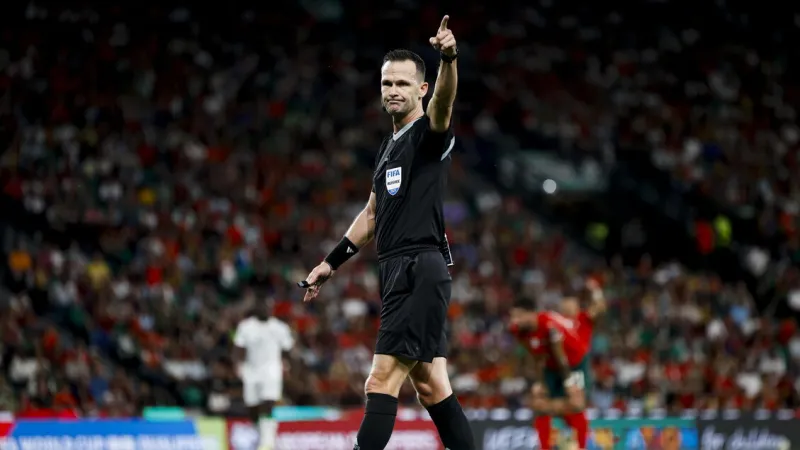
ZURICH – The International Federation of Association Football (FIFA) has unveiled an unprecedented sponsorship initiative, integrating a deodorant brand's logo onto the uniforms of fourth officials, a move that redefines the landscape of sports advertising. This innovative, and some might say intrusive, commercial placement ensures brand visibility precisely when officials raise the electronic substitution board during football matches.
The strategic deployment of this advertising space capitalizes on a moment of peak attention, as millions of eyes globally focus on the fourth official signaling player changes or added time. The brand name appears distinctly on the official's sleeve or arm area, becoming visible only when their arm is elevated to display the board.
This development signifies FIFA's continuous exploration of new revenue streams and its willingness to push traditional marketing boundaries within the world's most popular sport. Critics and enthusiasts alike are now grappling with the implications of such pervasive commercialization.
Industry observers suggest that this particular FIFA sponsor deal targets a demographic deeply engaged with personal care products, leveraging the high-pressure, physical environment of professional football. The unexpected nature of the placement guarantees a degree of viral attention, at least initially.
Historically, sports organizations have steadily increased commercial integrations, from jersey sponsorships and stadium naming rights to virtual advertising on pitch-side boards and broadcast overlays. However, directly transforming a match official's body into a mobile billboard represents a novel frontier.
The governing body faces the perpetual challenge of balancing the sport's integrity and tradition with the financial imperative to grow and sustain its global operations. Such sponsorships contribute significantly to the colossal prize money pools and infrastructure development projects that FIFA oversees worldwide.
Many traditionalists express concern that the aesthetic purity of the game is slowly eroding under the relentless march of commercialism. They argue that every inch of the pitch and every participant is becoming a commodity, detracting from the inherent drama and athletic prowess on display.
Conversely, proponents of modern sports marketing laud FIFA's ingenuity in identifying untapped advertising real estate. They contend that in an increasingly fragmented media landscape, bold and unconventional approaches are necessary to capture audience attention and deliver value for sponsors.
This initiative could pave the way for similar micro-sponsorships across various sports, potentially transforming elements previously considered sacrosanct into lucrative advertising platforms. The immediate impact on fan perception and future commercial negotiations remains a key area of observation.
The move draws parallels with other unique moments in football, such as when a player might unexpectedly interact with a piece of official equipment. For instance, the incident where a player donned a referee's lost watch mid-game, though accidental, demonstrated how elements traditionally separate from commercial display can suddenly command attention. Paraguay Scorer Dons Referee's Lost Watch Mid-Game. This new FIFA sponsorship is, however, a calculated commercial venture.
As football continues to evolve, the balance between preserving its heritage and embracing financial innovation will undoubtedly remain a contentious but vital discussion point for stakeholders across the globe. This latest FIFA sponsor deal underscores that the limits of commercial integration are constantly being tested.
The brand, whose identity remains under wraps for now, is expected to benefit from unparalleled visibility during critical moments of any match. Every substitution, every injury time announcement, will now carry a subtle yet distinct commercial message, embedded directly into the fabric of the game's officiating.
Such innovative placements are designed not just for direct brand recognition, but also to generate buzz and discussion, further amplifying the sponsor's reach beyond mere broadcast impressions. The goal is to create memorable and perhaps even polarizing associations that stick with the audience long after the final whistle.
The success of this venture will likely be measured not only in revenue generated but also in how gracefully it integrates into the viewer experience without causing significant backlash. FIFA's reputation for navigating complex commercial waters will be further tested by this high-profile gamble.
This strategy reflects a broader trend in global sports where every available surface and moment is scrutinized for its commercial potential. From e-sports to traditional athletic competitions, the line between sport and spectacle, performance and promotion, continues to blur.
Ultimately, this new era of FIFA sponsorship signifies an ongoing re-evaluation of how sports organizations can maximize their commercial appeal in a rapidly changing global economy. The fourth official's arm, once a purely functional limb, now holds symbolic weight as a new frontier in advertising.