Gabriella
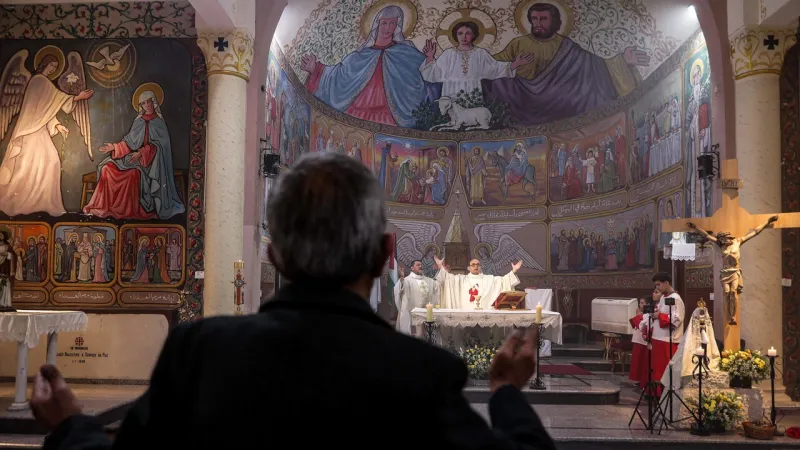
One year after a devastating raid struck a church in Gaza, residents endure a relentless state of emergency marked by soaring fuel costs and the insidious advance of a restrictive demarcation, parish priest Romanelli confirmed. Despite these profound challenges, a flicker of hope emerges with the anticipated return of 1,000 children to school this September, a testament to the community's resilience.
The initial raid, a year prior, sent shockwaves through the already embattled territory, exacerbating humanitarian concerns and deepening the sense of insecurity. While specific details of that incident remain largely undiscussed in current reports, its lasting impact on the local populace is undeniable, contributing significantly to the ongoing crisis Father Romanelli describes.
Life in Gaza, already fraught with complexities, now contends with an acute economic strain driven by exorbitant fuel prices. “Gasoline through the roof,” Father Romanelli stated, painting a stark picture of daily financial burdens that affect everything from transportation to basic services, further squeezing an already struggling population.
Compounding this economic hardship is the concerning advancement of what has been termed the “yellow line.” This phrase, often used to denote expanding buffer zones or areas under heightened security control, signals increased restrictions on movement and access for residents. Such encroachments inevitably shrink the habitable and cultivable land, intensifying pressure on a confined populace.
Father Romanelli's account captures the paradox of survival in Gaza: an environment where profound adversity coexists with unwavering aspirations for a better future. His focus on the children's education underscores a deep-seated belief in the power of learning to transcend immediate suffering and lay foundations for generational progress.
The planned enrollment of 1,000 children into schools in the coming months offers a vital symbol of continuity and defiance. In a region where stability is often fleeting, ensuring access to education becomes a critical act of preserving normalcy and investing in the human capital of the future, despite the lingering emergency.
This localized struggle unfolds within a broader regional context of persistent volatility. The Middle East frequently experiences periods of heightened tension, as evidenced by reports such as US Strikes Iran Again As Tankers Blaze in Vital Strait, which highlight the precarious geopolitical landscape. Such wider conflicts inevitably cast a shadow over more localized humanitarian crises.
The international community often faces calls for increased aid and intervention in Gaza, yet the effectiveness and reach of these efforts are continuously tested by the complex political and security dynamics. The enduring emergency serves as a poignant reminder of the necessity for sustained global attention and practical support.
For the families of Gaza, navigating these daily challenges requires immense fortitude. The high cost of fuel impacts food distribution, healthcare access, and the overall functionality of a besieged society. The psychological toll of living under constant threat and economic duress is profound, yet often goes unaddressed in official reports.
As September approaches, the sight of children returning to school promises a momentary respite from the relentless cycle of crisis. It represents a collective aspiration to reclaim aspects of ordinary life, even if temporary. The dedication of individuals like Father Romanelli to foster this hope is crucial in a place where optimism is a precious, hard-won commodity.
The long-term prospects for Gaza remain intricately linked to broader political resolutions and a sustained commitment to humanitarian principles. Until then, the community continues to demonstrate remarkable resilience, drawing strength from every small victory, such as the opening of school doors for its young generation, against the backdrop of an ongoing emergency.