 Debby Wijaya
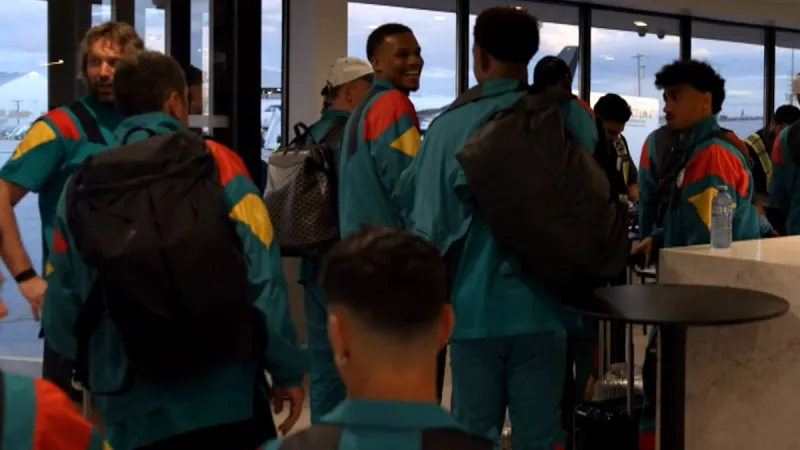
Berlin – The German national football team is bracing for an unprecedented logistical undertaking as the 2026 World Cup demands an XXL travel itinerary across three North American host countries. With gigantic distances between venues and a meticulously planned schedule, the tournament presents formidable challenges for player welfare, performance, and overall team management, requiring the German Football Association (DFB) to innovate its approach.
This expanded 48-team tournament, hosted jointly by the United States, Canada, and Mexico, marks a significant departure from previous World Cup formats. The sheer geographical scale necessitates extensive air travel, pushing the boundaries of traditional team preparation and recovery strategies.
The German squad, known for its rigorous training and tactical precision, must now contend with factors like jet lag, differing climatic zones, and reduced recovery times between matches. These elements are set to test the physical and mental resilience of players throughout what promises to be a grueling competition.
While the specific match schedule and venue allocations for each team are still pending, the prospect of playing group stage matches across disparate locations like Vancouver, Mexico City, and New York underscores the monumental task at hand. Such diverse environments require adaptable training regimens and sophisticated acclimatization protocols.
The gigantic distances are not merely symbolic. Flights between some potential host cities can span thousands of miles, mirroring transcontinental journeys. A hypothetical route from a venue in western Canada to one in the southern United States could easily exceed six hours of flight time, not including airport transfers and waiting periods.
The tournament organizers have emphasized a perfectly timed schedule to accommodate the expanded format and vast geography. While designed for efficiency, this tight orchestration offers little margin for error or unexpected delays, placing immense pressure on team logistics managers to execute flawlessly.
Sports scientists and medical experts are scrutinizing the potential impact on athletes. Dr. Elena Petrova, a leading sports physiologist, recently noted, "Maintaining peak physical condition amidst such extensive travel will require innovative recovery techniques and individualized player monitoring. The cumulative fatigue could be a decisive factor in later stages of the tournament."
Historically, World Cups have posed travel challenges, from the sprawling distances of Brazil in 2014 to the vastness of Russia in 2018. However, the 2026 edition, encompassing three distinct nations with varying regulations and time zones, introduces a complexity scale previously unseen in football's premier event.
The DFB coaching staff, led by Julian Nagelsmann, faces critical strategic decisions. Balancing player workload, squad rotation, and effective acclimatization will be paramount. Discussions around optimal base camps and pre-tournament preparation venues are likely already underway to mitigate travel effects. The approach will undoubtedly differ from how Nagelsmann handled previous lineups, such as his firm stance on Undavs Bench Brilliance.
Performance analysts predict that teams with superior logistical planning and player management will gain a significant competitive edge. The ability to minimize disruptions from travel and maximize recovery could be as crucial as on-field tactics.
Considerations extend beyond the players to the entire entourage, including support staff, equipment, and security. Transporting an entire professional football ecosystem across borders multiple times within weeks demands military-grade precision and coordination.
The DFB is expected to invest heavily in bespoke solutions, including dedicated charter flights equipped for athlete comfort and recovery, along with advanced nutritional and medical support systems tailored to counteract travel fatigue.
While the logistical hurdles are undeniable, the German players remain focused on their primary objective: securing a fifth World Cup title. Midfielder Joshua Kimmich, in a recent interview, stated, "We know the tournament will be demanding, but our focus is on performance. We trust the DFB to provide the best possible conditions for us to succeed."
The immense travel also impacts fan engagement. Supporters planning to follow their national team will face significant costs and complex travel arrangements to traverse the vast North American landscape, potentially affecting match attendance for some games.
The expansive tournament structure has also drawn criticism, with some coaches raising concerns over fair play and equitable conditions. Ivory Coast Coach Slams Germany in a previous World Cup instance, highlighting how team conditions can become points of contention. The 2026 format could amplify such debates.
For the host nations, managing such a spread-out event also presents unprecedented challenges in terms of security, transportation infrastructure, and coordination among various municipal and national authorities across two time zones for Canada, four for the US, and three for Mexico.
Ultimately, the 2026 World Cup promises to be a spectacle of footballing prowess, but beneath the surface, it represents a grand experiment in mega-event logistics. The German national team's journey through this logistical gauntlet will be closely watched, not just for their performance on the pitch, but for how they navigate the intricate web of continental travel.