 Robert Andrison
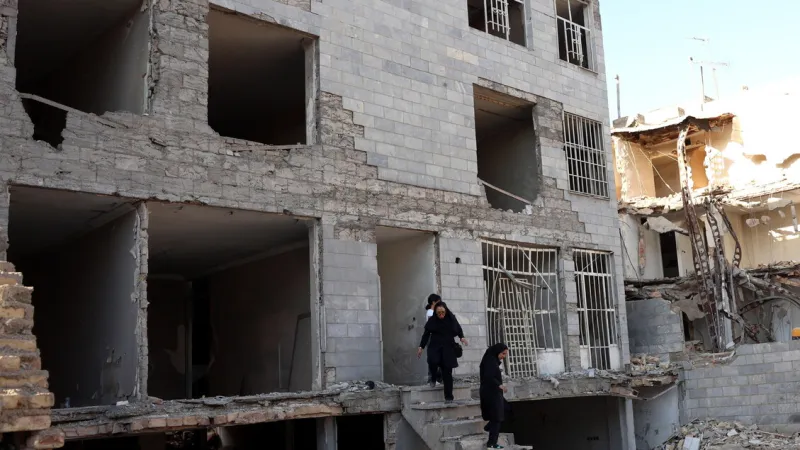
WASHINGTON – Israel and Lebanon have reportedly forged an agreement on a crucial truce and the establishment of new security zones, diplomatic sources confirm, with a critical provision explicitly excluding the Hezbollah militant group from these strategic areas. The breakthrough signals a concerted effort to de-escalate tensions along their volatile border, even as high-level talks are slated to continue in Washington during the week of June 22, 2026.
This nascent accord represents a significant diplomatic stride aimed at mitigating the persistent cross-border skirmishes and the broader regional instability that has plagued the Levant. The stipulation concerning Hezbollah underscores the international community's growing apprehension regarding the group's operational reach and its impact on peace prospects.
Years of intermittent conflict and simmering hostilities have defined the relationship between the two nations, often exacerbated by Hezbollah's presence and activities in southern Lebanon. This proposed truce seeks to create a buffer, limiting the group's ability to operate freely in sensitive border territories.
While specific parameters of the security zones remain under wraps, observers anticipate they will involve delineated areas on both sides of the Blue Line, designed to prevent military incursions and provide early warning mechanisms against hostile actions. The exclusion of Hezbollah is central to the agreement's perceived efficacy.
The United States, under President Donald Trump, has played a pivotal role in facilitating these delicate negotiations, advocating for a resolution that fosters regional stability. Washington's continued engagement highlights the strategic importance of preventing further escalation in the Middle East.
Hezbollah, a powerful political and military force in Lebanon, has not yet issued an official statement regarding the reported agreement. Its potential reaction and adherence to the terms will be a critical factor in the long-term success of the truce. Analysts suggest the group faces immense pressure from within Lebanon and from international actors.
For Lebanon, grappling with profound economic challenges and political fragmentation, a stable border could offer a much-needed respite, potentially attracting foreign investment and enabling greater focus on internal reforms. The government's ability to enforce the exclusion of Hezbollah from designated zones will be closely watched.
Israel's primary objective has consistently been to neutralize threats emanating from its northern border, particularly those posed by Hezbollah's advanced missile capabilities. The establishment of security zones, devoid of the militant group, aligns with Israel's long-standing security doctrines.
The continuation of talks in Washington this month underscores the complex nature of the negotiations and the need for ongoing dialogue to finalize the intricate details of the accord. Diplomatic delegations from both nations are expected to tackle implementation protocols and verification mechanisms.
The potential for a lasting Israel-Lebanon truce, particularly one that curtails Hezbollah's influence in border areas, could significantly alter the regional geopolitical landscape. It sends a strong signal to other state and non-state actors that diplomatic solutions are being prioritized over armed conflict.
This development follows a period of heightened regional volatility, including ongoing discussions surrounding the Iran deal, as regional tensions flare. While distinct, these diplomatic efforts reflect a broader push for de-escalation in the Middle East. Another article about an Israeli arrest citing a Hamas terror link also illustrates the complex security environment in the region.
The path to full implementation will undoubtedly present formidable challenges, yet the initial agreement marks a tentative but hopeful step towards a more peaceful coexistence between Israel and Lebanon. The world watches keenly as Washington prepares for the next round of critical discussions.