 Chandra Wijayanto
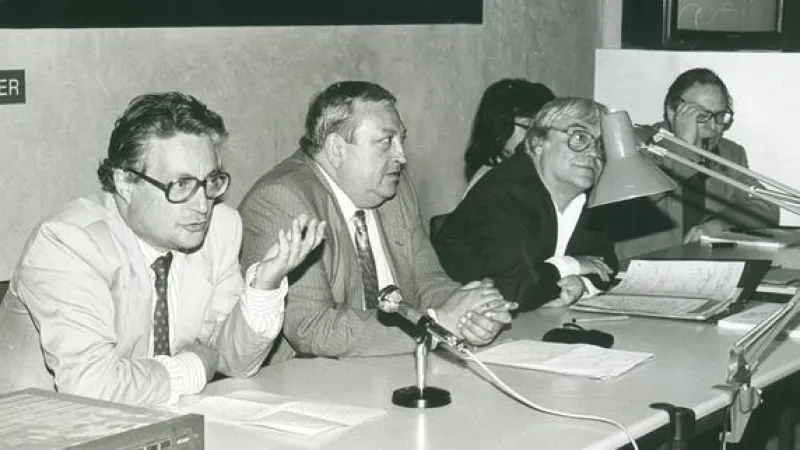
The intellectual world mourns the passing of Jean-Claude Passeron, a pivotal French sociologist whose groundbreaking work, especially in collaboration with Pierre Bourdieu, redefined the understanding of education and its role in social reproduction. Passeron, who served as a Director of Studies at the École des Hautes Études en Sciences Sociales (EHESS) and as a professor at the University of Vincennes, leaves a profound legacy that continues to influence contemporary sociological thought.
His passing marks the end of an era for a scholar who, alongside Bourdieu, authored several seminal texts that fundamentally renewed the sociology of education in France and beyond. Their joint efforts provided a critical lens through which to examine the mechanisms perpetuating social inequalities within educational systems.
Among their most enduring contributions is the 1970 work, La Reproduction: Éléments pour une Théorie du Système d'Enseignement (Reproduction in Education, Society and Culture). This monumental book challenged prevailing notions of meritocracy, arguing that schools, far from being neutral vehicles of social mobility, actively reproduce existing class structures by valorizing the cultural capital of dominant groups.
The concepts of cultural capital and habitus, while often attributed primarily to Bourdieu, were meticulously developed and refined through Passeron's rigorous intellectual engagement. Their shared analytical framework illuminated how inherited cultural predispositions and social learning shape educational trajectories and ultimately, societal positions.
Passeron's scholarship extended beyond direct collaboration. His later work, particularly within the field of epistemology, explored the logic of scientific inquiry and the methodologies of social sciences. His contributions to the theory of knowledge offered critical insights into how social scientists construct their objects of study and validate their findings.
His tenure at the EHESS, a bastion of interdisciplinary research, provided a fertile ground for developing his complex theories. As a Director of Studies, he mentored generations of students, instilling in them a critical approach to social phenomena and a dedication to empirical rigor.
At the experimental University of Vincennes, founded in the tumultuous wake of May 1968, Passeron was part of an intellectual vanguard aiming to democratize higher education and challenge traditional academic hierarchies. This environment fostered a spirit of innovation and critique that permeated his research and teaching.
The influence of Passeron and Bourdieu's work is not confined to academia. Their analyses have shaped public discourse on educational reform, social justice, and the persistent challenges of inequality. Policymakers, educators, and activists frequently draw upon their framework to understand and address disparities in access and outcomes within schooling systems.
Passeron's ability to fuse sociological theory with empirical observation provided a powerful tool for dissecting the subtle yet pervasive ways in which power operates within institutions. His intellectual legacy is characterized by an unwavering commitment to unveiling the often-hidden mechanisms of social domination.
His work prompts crucial questions that remain highly relevant today: How do educational institutions inadvertently reinforce social stratification? What role do cultural norms play in academic success? And how can societies genuinely foster equality of opportunity in the face of deeply entrenched social hierarchies?
The complexity of Passeron's thought demanded careful study, yet its conclusions resonated with those seeking a deeper understanding of society's inner workings. His contributions offered not just critique but also a framework for imagining more equitable social structures.
His collaboration with Bourdieu, often seen as one of the most fruitful intellectual partnerships in 20th-century French sociology, produced a body of work that continues to be a cornerstone for anyone studying the intersection of class, culture, and education.
The academic community will remember Jean-Claude Passeron not only for his profound theoretical contributions but also for his intellectual integrity and his relentless pursuit of a more nuanced understanding of human societies. His ideas will undoubtedly continue to inspire and provoke critical thought for years to come.
His departure represents a significant loss for the social sciences, yet the foundations he helped lay will continue to support new generations of scholars in their quest to decipher the complexities of the social world.