 Dodi Irawan
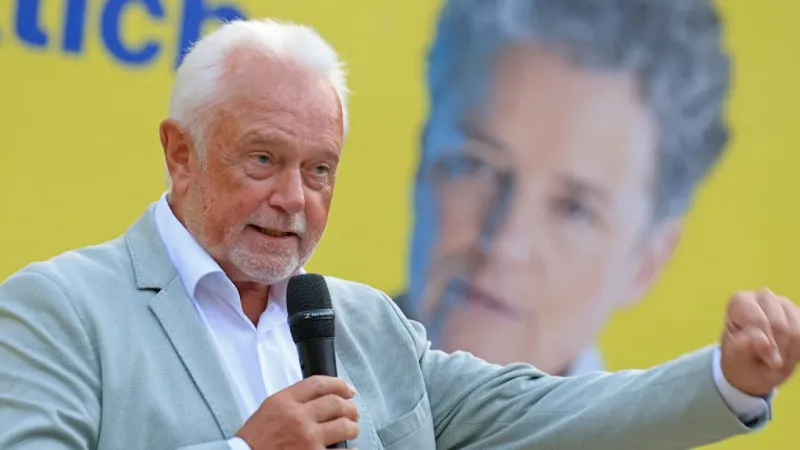
Wolfgang Kubicki, Deputy Leader of Germany's liberal Free Democratic Party (FDP), has sharply criticized media outlets and political figures for what he deems overly aggressive anti-AfD election campaigns. In a recent column, Kubicki asserted that these exaggerated strategies inadvertently bolster the far-right Alternative for Germany (AfD), playing directly into the party's hands ahead of upcoming elections in 2026.
Kubicki, a prominent voice within the FDP, argues that the intense focus on condemning the AfD, rather than engaging with its voters legitimate concerns, creates a reactive dynamic benefiting the populist party. He described such approaches as a cross-front firewall against common sense, a phrase underscoring his belief that these tactics undermine rational political discourse.
His critique centers on the perception that certain campaigns are overblown, contributing to a sense of victimhood among AfD supporters and potentially drawing sympathy from a broader electorate disillusioned with mainstream politics. This sentiment, he suggests, allows the AfD to portray itself as an underdog, battling an establishment determined to silence dissenting voices.
The current political landscape in Germany sees the AfD maintaining significant support, a trend that Kubicki believes is exacerbated by what he views as miscalculated opposition strategies. The party has capitalized on anxieties regarding immigration, economic policies, and national identity, resonating with a segment of the population that feels unheard by traditional parties.
Kubicki's intervention highlights a recurring debate among democratic parties on the most effective way to counter the rise of far-right and populist movements. Should the approach be one of outright condemnation and exclusion, or does a more nuanced strategy of engagement and addressing underlying grievances offer a better path?
The FDP official suggests that the current tactics risk alienating moderate voters who may not align with the AfD's extremist elements but are weary of what they perceive as moralistic or condescending dismissals from the political mainstream. This alienation can inadvertently push undecided voters towards the AfD, not out of ideological conviction but out of protest.
The issue is particularly salient as Germany prepares for a series of regional elections and looks towards the next federal election cycle in 2026. The performance of the AfD in these contests will be a critical indicator of the broader political direction of the nation.
Internal disagreements within the established parties on how to confront the AfD are not new, but Kubicki's public column underscores the depth of this strategic dilemma. His party, the FDP, often walks a tightrope between coalition responsibilities and its own liberal principles, which inherently reject extremist ideologies.
Beyond Germany, similar debates unfold across Europe, where populist parties are challenging traditional political structures. The experience in Germany, therefore, offers a case study in the complexities of managing political discourse in an era of heightened polarization.
Some political observers argue that a strong, unified stance against extremism is essential, regardless of the potential for a backlash. They contend that any perceived softening could legitimize the AfD's more controversial positions and undermine democratic norms.
However, Kubicki's perspective aligns with those who advocate for a strategy that focuses on robust policy alternatives and transparent communication, rather than what he perceives as reactive and ultimately counterproductive moralizing. He emphasizes the importance of winning over voters through substantive arguments and demonstrating effective governance.
Such a strategy could involve highlighting the practical implications of AfD policies and exposing their inconsistencies, rather than relying solely on labels. This approach seeks to dismantle the AfD's appeal by presenting a compelling vision for the future that addresses public concerns without resorting to inflammatory rhetoric.
The challenge for German political actors, as Kubicki articulates, is to avoid the trap of inadvertently amplifying the AfD's narrative through overzealous opposition. Achieving this balance requires careful calibration and a willingness to critically assess the efficacy of current campaigning methods.
Indeed, some other German parties are also navigating complex relationships and potential alliances regarding the AfD. For instance, the German BSW Party Eyes AfD Partnership to Block Ukraine Support, demonstrating the fluid nature of political alignments in the face of evolving challenges.
The media, a key focus of Kubicki's criticism, also plays a crucial role in shaping public perception. The Deputy Leader implicitly calls for journalism that maintains its impartiality, providing factual reporting and analysis without appearing to engage in partisan campaigning.
Ultimately, Kubicki's critique serves as a call for self-reflection within Germany's political and media spheres. It questions whether current anti-AfD campaigns are truly effective in stemming the party's influence or if they are, in fact, creating unintended consequences that bolster its appeal among a disaffected electorate.