 Chris Robert
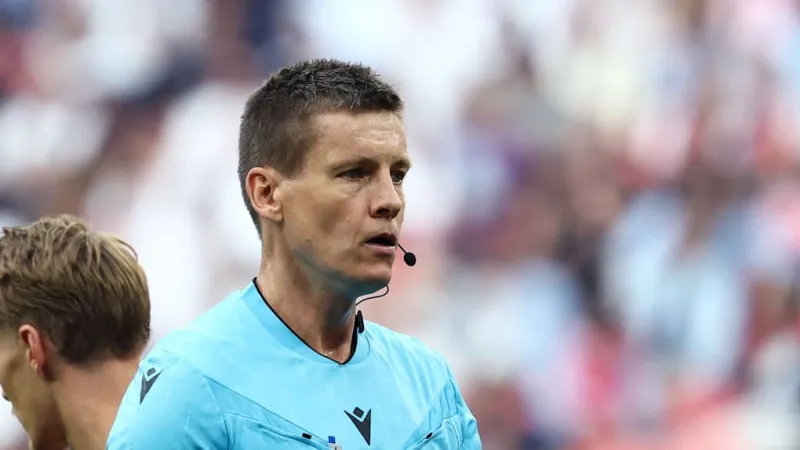
In a highly unusual and contentious decision during the Champions League Final, German referee Daniel Siebert abruptly ended the first half by blowing his whistle as Arsenal prepared to take a corner kick, effectively halting the English side's perceived time-wasting tactics against Paris Saint-Germain after taking an early lead.
The incident, occurring moments before the regulation 45 minutes of the first half concluded, immediately ignited debate among fans, pundits, and players alike. Arsenal, having secured an early advantage, appeared to be deliberately slowing the pace of the game, a common but often frowned-upon strategy in high-stakes matches.
The Gunners established their lead early in the contest, placing immense pressure on Paris Saint-Germain (PSG) to equalize. With the clock winding down towards the interval, Arsenal found themselves with a promising corner opportunity, yet the execution seemed deliberately delayed.
This perceived delay prompted Siebert to intervene decisively. Rather than allowing the corner to be taken and then adding appropriate injury time, the German official elected to bring the half to a close, a move rarely witnessed in professional football, especially in a final of such magnitude.
Referees possess significant discretion regarding the timing of half-time and full-time whistles, particularly when assessing additional time for stoppages. However, terminating a half mid-play, especially during a set-piece, stands out as an exceptionally bold interpretation of these rules.
The decision directly impacted Arsenal's tactical approach, which had seemingly shifted towards preserving their slender lead. Such time-wasting can involve slow restarts, extended injury checks, or deliberate delays in taking free kicks and corners, all aimed at frustrating opponents and running down the clock.
The immediate aftermath saw confusion and frustration from Arsenal players, who protested Siebert's call. PSG players, conversely, likely viewed the intervention as a fair attempt to maintain the integrity and flow of the game, penalizing their opponents for unsporting conduct.
This incident adds another layer of drama to what was already anticipated as a thrilling showdown between two European giants. The Champions League Final represents the pinnacle of club football, where every decision, every second, holds immense weight. Arsenal, PSG Square Off in Pivotal Champions League Final in a match that promised high stakes.
The implications for the second half are substantial. Arsenal must now reassess their strategy, knowing that their attempts to control the tempo through deliberate delays may be met with swift and unconventional referee action. This could force them into a more proactive offensive stance.
For Daniel Siebert, the decision undoubtedly places him under intense scrutiny. While some will commend his courage in addressing what he perceived as unsporting behavior, others will criticize the timing and the potential disruption to the natural rhythm of the game.
Such moments often become talking points for years, influencing future refereeing directives and player conduct. The balance between allowing natural game flow and curbing disruptive tactics remains a perennial challenge for officials at the highest level.
The controversy underscores the fine line referees walk in maintaining fairness while managing the competitive spirit of professional sports. Every call, particularly in a final, is amplified, dissected, and often replayed endlessly.
As teams headed to the locker rooms, discussions were undoubtedly heated, with coaches needing to adjust strategies not only for their opponents but also in light of the referee's willingness to make such an impactful, unconventional call.
PSG's task of overcoming the deficit now seems marginally altered. With potential time-wasting avenues potentially curtailed, they might anticipate a more fluid second half, allowing them more opportunities to press for an equalizer without prolonged interruptions.
This episode serves as a stark reminder that even the most experienced teams in the most prestigious competitions are subject to the immediate and sometimes unpredictable interpretations of the rules by match officials.