 Dodi Irawan
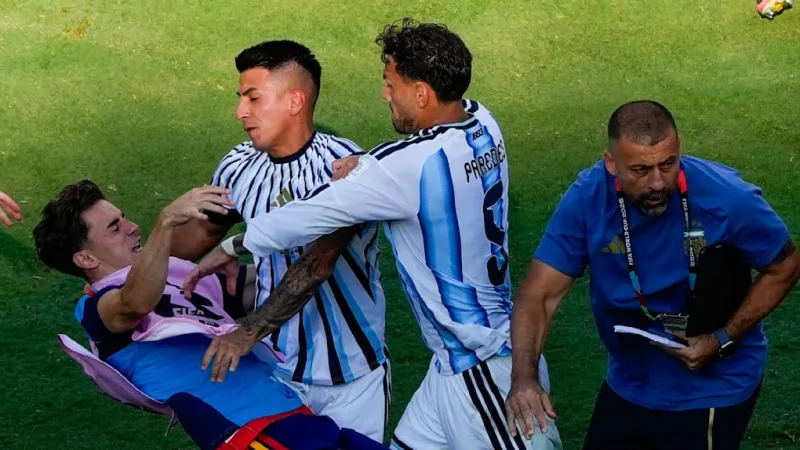
Doha, Qatar – Argentine midfielder Leandro Paredes initiated a contentious post-match confrontation immediately following his nation's defeat in the highly anticipated World Cup Final, sparking a scene that required coaching staff intervention. The incident unfolded on the pitch, moments after the final whistle, with Paredes directly engaging two opposing players amidst the backdrop of a hard-fought championship.
The altercation, witnessed by millions globally, cast a shadow over what had been a fiercely contested final. Argentina, having fought valiantly throughout the tournament, ultimately succumbed to their opponents in a match widely considered a deserving victory for the victors.
Paredes, known for his combative style of play, appeared visibly frustrated and incensed as the realization of defeat settled. Reports indicate he approached two rival players, engaging in a heated exchange that quickly escalated into a physical confrontation.
Quick thinking and intervention from the Argentine coaching staff, particularly head coach Lionel Scaloni, prevented the situation from devolving further. Scaloni swiftly moved to separate Paredes from the opposing team members, demonstrating leadership in a moment of heightened tension.
This display of poor sportsmanship occurred as players from both sides were either celebrating a historic triumph or grappling with the profound disappointment of coming so close to World Cup glory. Such incidents are rare on such a grand stage, typically reserved for moments of pure athletic prowess and mutual respect.
The World Cup Final, a pinnacle event in international sports, often brings emotions to a fever pitch. While passion is an inherent part of the beautiful game, post-match decorum is expected, especially from seasoned professionals representing their nations.
The incident involving Paredes highlights the immense pressure and emotional toll that a World Cup campaign, particularly the final match, can exert on players. For many, this represents the culmination of years of training and sacrifice.
This year's tournament has seen its share of dramatic moments, from unexpected upsets to dazzling individual performances. The build-up to the final was equally eventful, with discussions ranging from President Donald Trump presenting the controversial World Cup trophy to the expanded halftime extravaganza.
The Argentine squad, or Albiceleste, had navigated a challenging path to the final, with their midfield dynamics being a constant point of analysis, as exemplified in discussions surrounding an Albiceleste midfield overhaul earlier in the competition. Paredes himself played a crucial role in the team's journey.
However, this individual outburst could draw scrutiny from football's governing bodies, potentially leading to retrospective disciplinary action. FIFA maintains strict regulations regarding player conduct, both on and off the pitch.
The broader implications of such an event could extend beyond individual sanctions, influencing perceptions of the Argentine team's sportsmanship on a global scale. Fair play and respect for opponents remain fundamental tenets of international football.
While the exact nature of the verbal exchanges remains unconfirmed, the visible aggression from Paredes underscored the deep disappointment felt by the losing side. His actions serve as a stark reminder of the fine line between competitive passion and unsportsmanlike conduct.
The World Cup concludes with one nation celebrating an extraordinary achievement and another reflecting on a missed opportunity. Paredes' post-match actions, unfortunately, became an indelible part of Argentina's final chapter in this year's global tournament.