Robert Andrison

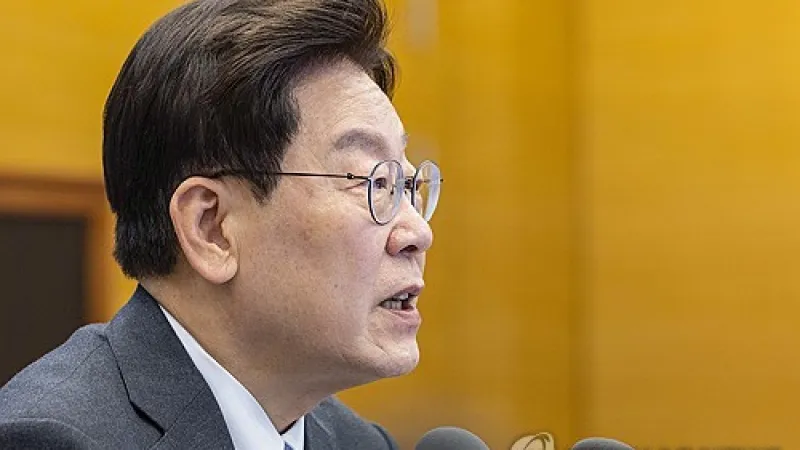
SEOUL, November 20 – President Lee Jae Myung on Friday publicly called for a complete and radical overhaul of South Korea's state examination system, citing the urgent need to combat widespread AI-assisted cheating that threatens to undermine academic integrity.
The presidential directive underscores a growing concern among educators and policymakers regarding the sophisticated capabilities of artificial intelligence tools. These advanced systems are increasingly exploited by students to circumvent traditional assessment methods, posing an unprecedented challenge to fair and equitable evaluation.
President Lee emphasized the necessity of proactive measures to safeguard the credibility of the nations academic landscape. His administration views the current examination framework as vulnerable to the rapid advancements in AI technology, which can generate responses, solve complex problems, and even mimic human writing styles with alarming proficiency.
The demand for systemic reform comes amidst a period where educational institutions worldwide grapple with the ethical implications and practical challenges posed by generative AI. South Korea, known for its highly competitive academic environment, faces particular pressure to adapt its high-stakes examinations.
Past incidents, such as widespread electronic cheating scandals that have previously rocked the College Scholastic Ability Test (CSAT), highlight the persistent vulnerabilities within the existing systems. The emergence of AI introduces a new, more insidious dimension to these perennial integrity issues, making detection increasingly difficult.
The President's office indicated that the proposed overhaul would not merely involve minor adjustments but a fundamental rethinking of how knowledge and skills are assessed. This could include integrating AI-resistant examination formats, developing sophisticated detection software, and re-evaluating the role of traditional memorization-based testing.
Educational experts suggest that the initiative will require significant investment in technological infrastructure and a paradigm shift in pedagogical approaches. The goal is to create an assessment environment that accurately reflects a students genuine abilities, rather than their capacity to leverage AI for illicit advantage.
This national debate mirrors broader global discussions on AI regulation and ethical technology use. Companies like Google, intensifying Gemini AI integration, and other tech giants are continually pushing the boundaries of what AI can achieve, making the adaptation of educational systems a moving target.
The potential implications of unchecked AI-assisted cheating extend beyond individual academic dishonesty. It risks devaluing educational credentials, eroding public trust in meritocracy, and ultimately compromising the quality of the future workforce and leadership.
President Lee's call for action sets a clear mandate for ministries, educational bodies, and technology innovators to collaborate on developing robust solutions. The challenge lies in creating a future-proof examination system that is both fair and capable of evolving alongside technological progress.