 Angel Doris
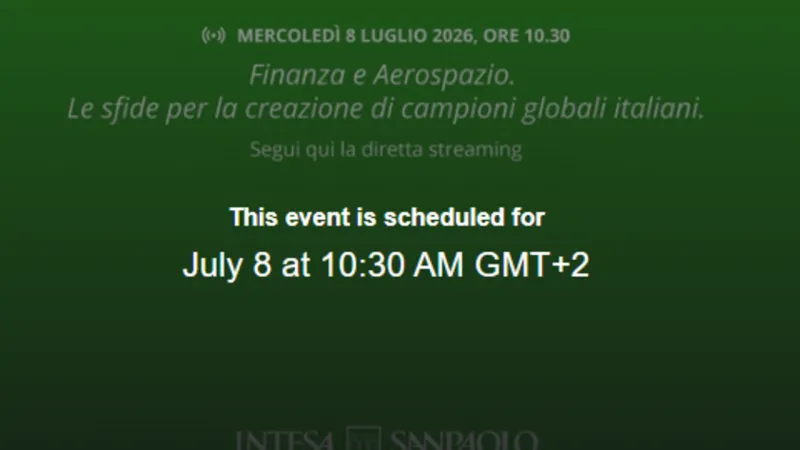
Turin, Italy – Leaders from the finance and aerospace sectors converged in Turin on a recent July 8 for a critical event addressing the burgeoning Space Economy. Hosted at the illustrious Auditorium of the Intesa Sanpaolo skyscraper and broadcast live on ANSA.it, the summit focused on navigating the strategic challenges and immense opportunities inherent in this rapidly evolving domain, crucial for global economic advancement.
The discussion underscored the aerospace sector's transition from a predominantly governmental and military sphere to a vibrant commercial ecosystem. This shift, dubbed the Space Economy, encompasses a wide array of activities, including satellite broadband, space tourism, asteroid mining, and advanced Earth observation services.
Participants emphasized that the Space Economy is not merely about technological innovation but also about financial acumen. Billions of euros in private and public investment are pouring into space ventures, necessitating sophisticated financial instruments and risk assessment strategies.
Speakers at the Turin event highlighted Italy's prominent position within the European aerospace landscape. The nation boasts a long-standing tradition of excellence in satellite technology, propulsion systems, and advanced materials, positioning it as a key player in this new frontier of economic growth.
Intesa Sanpaolo, as the host, exemplified the growing interest from major financial institutions in supporting space-related enterprises. Their involvement signifies the banking sector's recognition of the substantial, long-term returns expected from investments in space infrastructure and services.
The live broadcast by ANSA.it, Italy's premier news agency, ensured widespread public engagement and underscored the national importance of the topic. ANSA has a history of covering significant national events, including cultural milestones like the ANSA Unveils Landmark Women's Exhibition, demonstrating its commitment to informing the public on diverse subjects.
One of the central themes addressed was the dual challenge of sustainability and accessibility. As more entities enter space, concerns about orbital debris, responsible resource utilization, and equitable access to space capabilities become increasingly critical. Regulatory frameworks must evolve swiftly to keep pace with technological advancements.
The Space Economy promises to drive innovation across numerous terrestrial industries. Advancements made for space applications often find their way back to Earth, yielding breakthroughs in areas such as remote sensing for agriculture, advanced navigation, communication networks, and medical imaging.
Experts projected significant job creation within this sector, spanning engineering, data science, manufacturing, and legal fields. Italy's educational institutions are increasingly tailoring programs to meet the demand for specialized talent required by the growing aerospace and space-related industries.
The discussions in Turin also touched upon the competitive landscape, with nations worldwide vying for leadership in space technology and services. Strategic international partnerships and collaborative research initiatives were identified as vital for maintaining a competitive edge and fostering global progress.
Looking ahead, the summit emphasized the need for consistent policy support and public-private collaboration to fully unlock the potential of the Space Economy. Sustained investment in research and development, alongside robust regulatory guidance, remains paramount for future success.
The event served as a critical forum for stakeholders to align on common objectives and forge pathways for sustainable development in space. It reinforced Turin's role as a hub for innovation and strategic dialogue within Italy's industrial heartland.