Gabriella
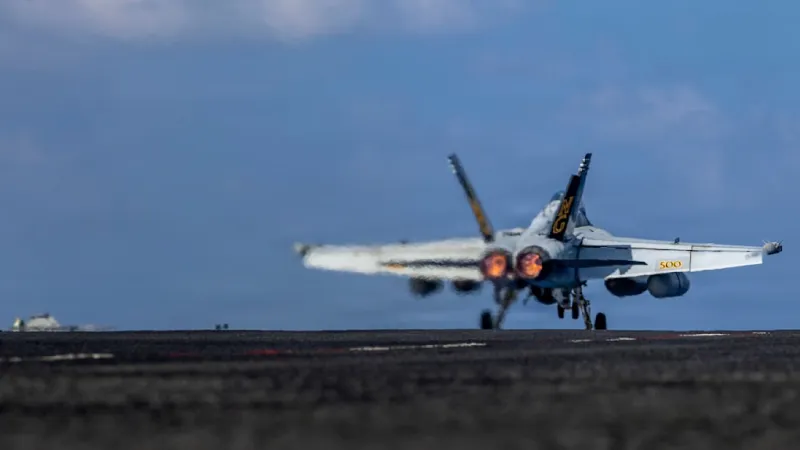
WASHINGTON – The US military has executed renewed strikes against installations linked to the Iranian Revolutionary Guard Corps (IRGC) within Iran, targeting rocket launchers, sophisticated air defense systems, and various naval vessels, according to multiple media reports. These strategic operations were reportedly undertaken with the explicit aim of safeguarding international shipping navigating the critical Strait of Hormuz. The aggressive posture has elicited significant alarm from the United Nations, which has issued an urgent plea for an immediate return to diplomatic negotiations to avert a broader regional conflagration.
The recent US military actions mark a noticeable escalation in the already fraught relationship between Washington and Tehran. While specific details regarding the timing and precise locations of these latest assaults remain under tight wraps, reports indicate the strikes were comprehensive, targeting key IRGC capabilities that pose a perceived threat to maritime security.
The Strait of Hormuz, a narrow waterway connecting the Persian Gulf with the Arabian Sea, serves as a choke point for a substantial portion of the world's oil supply. Its strategic importance cannot be overstated, making any disruption to its free passage a matter of global economic and security concern. The US has consistently asserted its commitment to ensuring unimpeded navigation through this vital channel.
President Donald Trump's administration has maintained a firm stance on deterring Iranian aggression and protecting US interests and allies in the Middle East. These strikes align with a broader policy of responding decisively to perceived threats posed by Iranian forces or their proxies in the region.
United Nations Secretary-General, through a spokesperson, conveyed the organization's profound concern over the escalating military engagements. The UN reiterated its long-held position that military solutions are counterproductive and emphasized the imperative of upholding international law and promoting peaceful resolutions to disputes. Calls for all parties to exercise maximum restraint were prominent.
This is not the first instance of US forces targeting Iranian assets, nor is it the first time the international community has expressed trepidation. Previous clashes and tensions in the Persian Gulf have underscored the volatility of the region and the delicate balance of power. The IRGC, a branch of Iran's armed forces, is often implicated in activities deemed destabilizing by the US and its allies.
The targeted IRGC naval vessels and missile systems are believed to be instrumental in Iran's ability to interfere with commercial shipping, a capability the US military seeks to neutralize. Ensuring the security of maritime trade routes remains a paramount objective for global commerce.
Observers worldwide are closely monitoring the unfolding situation, concerned that sustained military exchanges could spiral into a wider regional conflict, drawing in other regional and international actors. The potential humanitarian and economic ramifications of such an escalation are considerable, prompting widespread calls for calm.
Diplomatic channels, despite the ongoing military actions, remain the preferred pathway for many international stakeholders. The UN's call for a return to the negotiation table reflects a shared belief that direct dialogue, however challenging, offers the most viable route to de-escalation and long-term stability.
The broader geopolitical landscape of the Middle East is already complex, with numerous interconnected conflicts and rivalries. The current US military actions against Iranian targets add another layer of uncertainty, further challenging efforts to secure enduring peace in the region.
For further insights into the ongoing tensions and previous US engagements, readers may consult analyses such as US Forces Target Iranian Defenses, Hormuz Strait Tensions Escalate. This contextualizes the historical backdrop of these developments.
The international community faces a critical juncture, with the onus on key players to prioritize de-escalation and explore all available diplomatic avenues. The future stability of the Persian Gulf and global energy markets hinges on the restraint and wisdom of the involved nations.
President Trump has consistently articulated his administration's commitment to preventing Iran from developing nuclear weapons and curbing its regional influence. These military strikes are interpreted by some as a reinforcement of that policy, signaling a readiness to use force when deemed necessary to protect vital interests.
As reports continue to emerge, the immediate priority for global powers will be to prevent miscalculation and misinterpretation that could inadvertently lead to a more profound and destructive confrontation. The world watches for responses from Tehran and further statements from Washington and the United Nations.