 Dorry Archiles
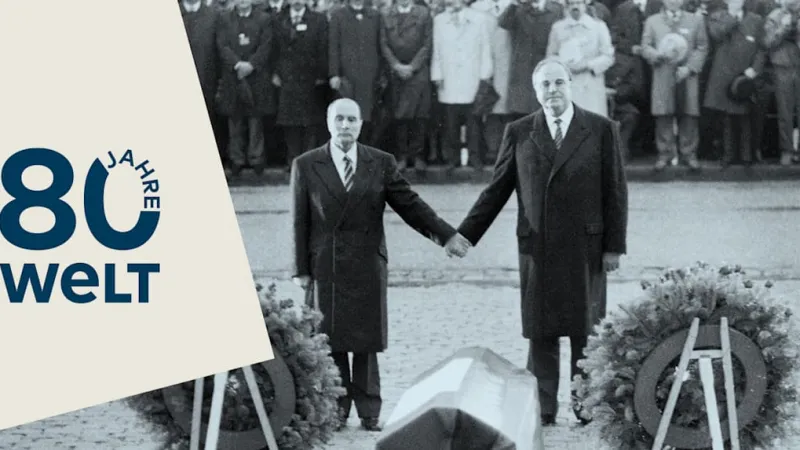
On September 22, 1984, at the hallowed grounds of Verdun, French President Francois Mitterrand and German Chancellor Helmut Kohl stood bareheaded, hand-in-hand, in a silent, solemn embrace. This potent gesture of Franco-German reconciliation, unfolding over the graves of countless soldiers, transcended mere diplomacy to forge a powerful symbol of unity, decades after the devastating conflicts that scarred Europe.
The location itself was imbued with profound historical weight. Verdun, the site of one of World War I's longest and bloodiest battles, remained an enduring scar on the European psyche, embodying the brutal animosity that once defined relations between France and Germany. The 1984 ceremony deliberately confronted this painful past, transforming a locus of conflict into a beacon of shared remembrance and a pledge for a peaceful future.
While appearing spontaneous, the iconic handshake was the culmination of meticulous planning and shared conviction between the two leaders. Both Mitterrand and Kohl recognized the immense symbolic power of such an act, understanding that a visible demonstration of solidarity was essential to cement the burgeoning Franco-German friendship and, by extension, the broader European project.
President Mitterrand, a veteran wounded during World War II, carried a personal understanding of the devastating human cost of conflict. His vision for Europe was deeply rooted in overcoming nationalistic rivalries, advocating for a strong, integrated continent where such atrocities could never again occur. For him, Verdun was not just a historical site but a living testament to the necessity of peace.
Chancellor Kohl, equally committed to reconciliation, approached the gesture with a profound sense of historical responsibility. Representing a post-war Germany eager to shed its burden of guilt and integrate fully into the European community, Kohl saw the hand-in-hand moment as an unequivocal affirmation of Germany's commitment to peace and cooperation with its former adversary.
Their shared determination came at a crucial juncture in the Cold War, when European solidarity was paramount. The bond between France and West Germany was considered the engine of European integration, and the visible display of trust and mutual respect between their leaders sent a powerful message of stability to the world.
Sources close to the negotiations at the time revealed the nuanced discussions that led to the event. Initial ideas included separate wreath-layings, but Mitterrand, with Kohl's full support, pushed for a single, unified act of remembrance. This joint posture, standing together in silence, was designed to convey an unbreakable bond.
The Verdun gesture built upon previous efforts toward Franco-German rapprochement, most notably the 1963 Elysee Treaty signed by Konrad Adenauer and Charles de Gaulle. However, Mitterrand and Kohl's moment was unique in its raw emotional power and direct visual impact, resonating deeply with generations who had lived through the conflicts.
This demonstration of profound reconciliation significantly bolstered the momentum for deeper European unity. It helped pave the way for subsequent milestones like the Maastricht Treaty, which laid the groundwork for the European Union and the introduction of a single currency, showcasing how political will can transform historical enmity into enduring partnership.
The legacy of Verdun endures as a powerful testament to the triumph of diplomacy and reconciliation over historical grievances. It serves as a constant reminder that even the most entrenched conflicts can yield to dialogue and a shared vision for peace and cooperation. This spirit of collaboration continues to shape contemporary European policy, influencing discussions on economic stability and collective security. The ongoing commitment to unity within the continent, exemplified by initiatives like the EU's strategic energy investments, reflects the long shadow of this pivotal moment, underscoring the enduring relevance of strong Franco-German ties for the broader European project. For example, recent agreements prioritizing flexibility in energy investment underscore the continuous efforts to harmonize economic and environmental goals across member states. This continuous pursuit of shared objectives demonstrates the enduring impact of historical gestures like the one at Verdun, cementing a foundation for collective progress.
Today, as Europe navigates complex geopolitical challenges, the image of Mitterrand and Kohl at Verdun remains a touchstone, symbolizing the capacity of nations to overcome a divisive past and construct a shared future based on mutual respect and collaborative governance. The event is widely regarded as a watershed moment, not just for Franco-German relations but for the entire trajectory of European integration and international diplomacy.