Angela Stefani
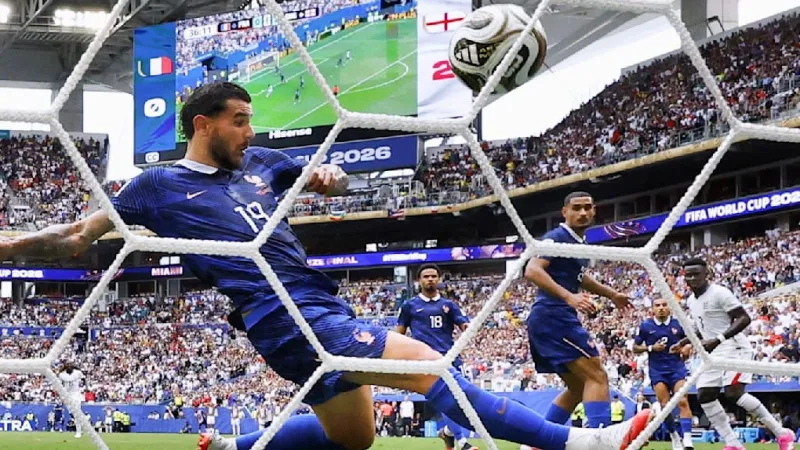
Cologne, Germany – While many neutral football enthusiasts lauded the 6-4 World Cup clash between England and France as the tournament's most exhilarating spectacle, MagentaTV analyst Jan Henkel delivered a scathing critique, branding the high-scoring affair as tactically abhorrent. Henkel, known for his deep tactical insights, viewed the thrilling encounter not as a display of attacking prowess but as a fundamental breakdown of strategic play, an assessment that starkly diverged from mainstream sentiment.
This passionate denunciation by the seasoned expert underscores a perennial debate in football: the tension between pure entertainment and tactical discipline. For many, the sheer volume of goals and end-to-end action provided an unforgettable experience, a testament to the unpredictable nature of World Cup football.
Henkel, however, saw past the goal fest, focusing instead on what he perceived as a chaotic lack of structure and defensive integrity from both sides. He did not mince words in his post-match analysis for MagentaTV, asserting that the game was “abysmal, really bad.” Such a pronouncement from a respected figure demands attention, particularly given the widespread praise the match received.
His perspective highlights the meticulous eye of a tactical fanatic. While the casual viewer might revel in a goal-laden contest, a specialist like Jan Henkel scrutinizes every pass, every positional error, and every strategic decision, or lack thereof. For him, the match represented “pure horror” from a coaching standpoint.
Atlanta, Georgia – The 6-4 scoreline, a rarity in high-stakes international football, suggested an open game with defensive frailties. While some might argue this creates excitement, Henkel evidently found the defensive lapses and midfield disorganization unforgivable for teams competing at the pinnacle of the sport.
This viewpoint offers a crucial counter-narrative to the celebratory accounts. It asks whether entertainment value should override the fundamental principles of football strategy. Was the game a thrilling chaos or simply poorly executed? Jan Henkel firmly leans towards the latter.
His analysis, broadcast on MagentaTV, served as a comprehensive dismantling of the game's tactical components. He likely dissected individual player performances, team formations, pressing schemes, and transitional play, finding them wanting on numerous fronts. This detailed critique stands in sharp contrast to the simpler narratives of heroic goals and dramatic comebacks often favored by broader media coverage.
The England-France rivalry, always intense, has produced memorable encounters on the World Cup stage. For instance, in a different context, England secured a World Cup bronze, triumphing 4-2 over France in a match that also saw significant drama, as detailed in reports like England Triumphs 4-2 Over France, Sealing World Cup Bronze. These matches, while thrilling, often invite varied interpretations from analysts like Henkel.
The expert's commentary provides valuable context for coaches and aspiring players, offering a deeper understanding of what constitutes high-level tactical execution versus an exhibition of individual brilliance amidst systemic weaknesses. It serves as a reminder that perception of a football match is highly subjective, influenced by one's lens as a fan or a specialist.
Ultimately, Jan Henkel's bold assessment challenges the football world to look beyond immediate gratification and consider the deeper strategic implications of high-scoring, seemingly chaotic games. His voice adds a critical, analytical layer to the often-emotional discussions surrounding major international tournaments. The debate continues whether a game defined by ten goals is inherently good or merely a symptom of deeper tactical issues, a question Henkel has definitively answered for himself.