 Robert Andrison
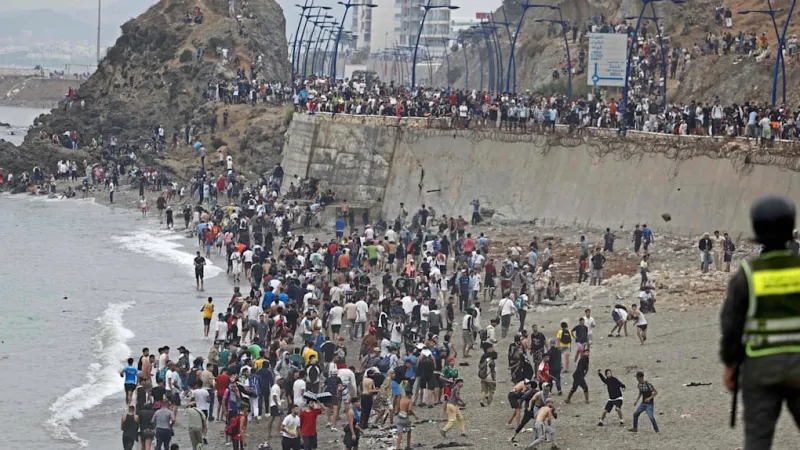
Ceuta, Spain – An unprecedented influx of approximately 60,000 migrants into the Spanish exclave of Ceuta has plunged the city into a state of emergency, prompting a direct visit from Spanish Prime Minister Pedro Sanchez, who was met with a chorus of public anger and frustration from exasperated citizens.
The swift and massive border crossing, primarily from Morocco, occurred over recent days, overwhelming local authorities and humanitarian resources in the autonomous city. The scale of the arrivals has exacerbated an already tense geopolitical situation and placed immense strain on the tiny enclave located on the North African coast.
Prime Minister Sanchez arrived to a city reeling from the crisis, observing firsthand the humanitarian challenges and the burgeoning social unrest. His presence underscored the severity with which Madrid views the situation, which has swiftly escalated beyond a localized border incident.
Upon his arrival, Sanchez was confronted by indignant residents voicing their profound concerns over public order, resource depletion, and what many perceive as a lack of effective governmental response. The encounter highlighted the deep chasm between official pronouncements and the lived reality on the ground.
The sudden surge of individuals, including thousands of unaccompanied minors, has triggered a humanitarian emergency. Aid organizations and security forces are struggling to provide shelter, food, and medical assistance to the new arrivals, many of whom are in vulnerable conditions after making the perilous journey across the border.
Spanish security forces, including the army, have been deployed to bolster border control and assist in managing the burgeoning population. Despite these efforts, the sheer volume of migrants has presented an almost insurmountable challenge for the enclave's infrastructure and personnel.
The crisis has significant diplomatic ramifications, particularly straining relations between Spain and Morocco. The uncontrolled nature of the border crossings has led to accusations and counter-accusations regarding border management and regional cooperation. Spain has called on Morocco to uphold its commitments to border control agreements.
This incident is not an isolated one, echoing previous challenges along the Ceuta border. Earlier reports, such as “Ceuta Border Overwhelmed: 49,000 Migrants Enter, 18 Dead Amid Clashes,” highlight the persistent pressures faced by the exclave, though the current scale far surpasses prior events.
The broader European Union is closely monitoring the situation, with calls for solidarity and coordinated action. The integrity of Spain's borders is also the integrity of a European external border, making this a matter of collective concern. The crisis has even led to discussions about the future of the Schengen Area, with some nations, like Italy, previously threatening its suspension amidst similar migrant influxes, as detailed in “Ceuta Migrant Crisis Deepens: Italy Threatens Schengen Suspension Amid Deaths.”
Local politicians and community leaders in Ceuta have appealed for immediate and sustained assistance from both the national government and the European Union, emphasizing the critical need for a long-term strategy beyond immediate emergency measures. They warn of potential social unrest and public health risks if the situation is not effectively managed.
The government has commenced the process of repatriating some of the adult migrants, yet the legal and logistical complexities, especially concerning minors, present considerable hurdles. The sheer number of individuals makes a swift resolution improbable, guaranteeing that Ceuta will remain a focal point of Spain's domestic and international policy for the foreseeable future.
As the days progress, the focus remains on stabilization, humanitarian aid, and diplomatic engagement to de-escalate tensions and formulate a sustainable approach to border management and migration in the region. The scenes in Ceuta serve as a stark reminder of the volatile nature of migration routes and the profound impact on frontline communities.