 Chandra Wijayanto
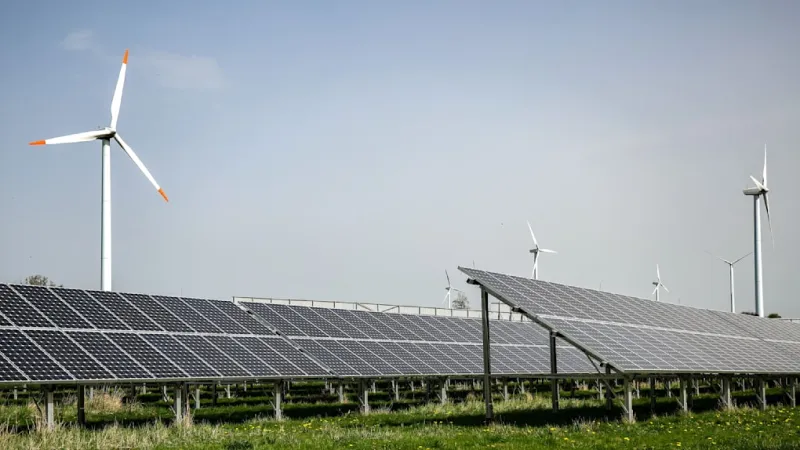
Hamburg – Germany is confronting an increasingly frequent and costly paradox in its energy market: negative electricity prices. This phenomenon occurs when an oversupply of power, primarily from renewable sources, meets insufficient demand on the energy exchange, forcing prices below zero. While seemingly beneficial, this situation burdens grid operators and the state with expensive interventions and subsidies, without automatically translating into lower costs for consumers.
The issue stems from the rapid expansion of renewable energy capacity, particularly wind and solar, which often generate power irrespective of real-time demand fluctuations. On days with strong winds or abundant sunshine, especially during off-peak hours or public holidays, the grid can become saturated.
During these periods of excess generation, electricity producers effectively pay consumers or grid operators to take power off their hands to prevent grid instability and potential blackouts. This mechanism, intended to balance the market, highlights a fundamental inflexibility within Germany's energy infrastructure.
Financial repercussions are substantial. Grid operators incur significant costs for redispatch measures, where they pay power plants, often conventional ones, to either ramp down or ramp up production to stabilize the system. These costs are ultimately passed on to consumers through various levies and network charges, negating any perceived benefit from negative prices.
Industry experts point to the lack of adequate energy storage solutions as a primary contributor to the problem. Without sufficient battery capacity or other storage technologies, surplus renewable energy cannot be efficiently captured and released when demand rises, perpetuating the supply-demand imbalance.
The German government, under intense scrutiny, acknowledges the growing challenge. Policymakers are exploring avenues for grid modernization, including digitalizing infrastructure and incentivizing the development of large-scale storage projects. The goal is to create a more resilient and responsive energy system capable of integrating higher shares of intermittent renewables.
This scenario is not unique to Germany but is particularly pronounced given its aggressive renewable energy targets and its position as a major industrial economy. Other European nations with high renewable penetration, such as Denmark, also experience instances of negative pricing, underscoring a broader continental challenge in energy transition.
Addressing the problem requires a multifaceted approach. Beyond storage, enhanced grid interconnectivity with neighboring countries could allow Germany to export excess power more effectively. Furthermore, implementing more dynamic pricing models could encourage industrial and commercial consumers to shift their energy consumption to periods of high supply and low prices.
Critics argue that the current market design inadvertently penalizes the very renewable energy sources it aims to promote, as producers face economic disincentives during times of peak generation. This can hinder further investment and slow the pace of decarbonization unless compensatory mechanisms are robust and fair.
For the average household, negative wholesale electricity prices offer no immediate relief. The complex structure of retail energy bills, which include taxes, levies, and network charges, ensures that consumers typically pay a fixed or steadily increasing rate regardless of wholesale market fluctuations.
The imperative to maintain grid stability while transitioning to a carbon-neutral economy presents a formidable engineering and policy puzzle. The nation's commitment to phasing out nuclear and coal power further amplifies the need for innovative solutions to manage intermittent renewable supply.
Investment in smart grid technologies, which allow for real-time monitoring and control of energy flows, represents a critical pathway forward. Such systems can optimize both generation and consumption, making the grid significantly more adaptable to varying conditions.
Ultimately, the frequent occurrence of negative electricity prices serves as a potent reminder that the energy transition is not merely about generating more green power, but also about building the sophisticated infrastructure and market mechanisms to manage it efficiently. Failure to address these systemic issues risks escalating costs for citizens and hindering Germany's ambitious climate goals.