Gabriella
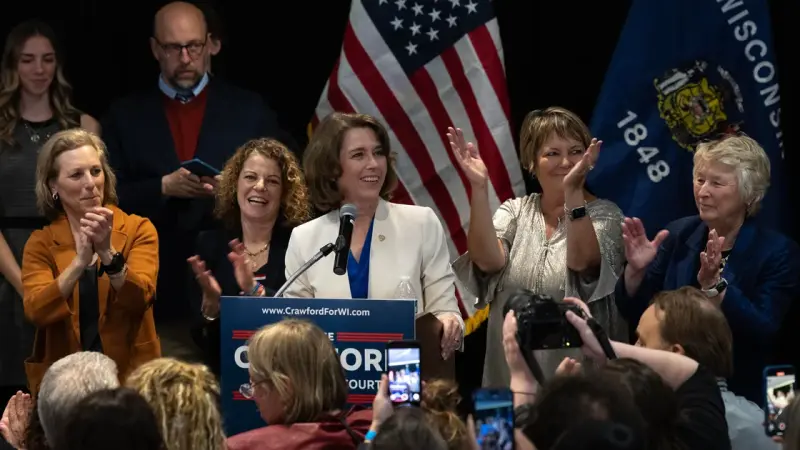
WASHINGTON — Recent electoral outcomes in Georgia and Wisconsin have delivered stark warnings to the Republican Party, shaping strategic considerations as the nation approaches the critical 2026 midterm elections. The results from key races in these battleground states underscored shifts in voter sentiment, illuminated the challenges of party unity, and offered a preview of the messaging battles ahead for President Donald Trump's administration and the wider GOP. Political analysts are scrutinizing these patterns to discern the path forward for Republicans seeking to maintain or gain power in Congress and statehouses.
One primary takeaway for the Grand Old Party involves the persistent challenge of suburban voter engagement. In both Georgia and Wisconsin, data suggests a continued struggle for Republicans to resonate with a demographic segment that has increasingly trended Democratic in recent cycles. While the party often performs strongly in rural areas, bridging the gap with moderate suburbanites remains a crucial hurdle for broader electoral success.
The performance in these states highlighted the necessity for nuanced messaging that addresses pocketbook issues and local concerns without alienating the base. Voters expressed varied priorities, from economic stability to educational policies, indicating that a one-size-fits-all approach may prove detrimental in diverse districts. The GOP must refine its communication strategies to connect effectively across different communities.
A second critical warning emanates from the internal dynamics within the Republican Party itself. The elections revealed ongoing tensions between different factions, particularly those aligned closely with President Trump's populist wing and more traditional conservative elements. This internal friction, at times, translated into lukewarm support for certain candidates or dampened enthusiasm among specific voter blocs.
Successful candidates in these contested states often managed to bridge these divides, demonstrating a capacity to unify disparate parts of the Republican coalition. For the national party, this suggests a need for robust candidate vetting and clear party platforms that can galvanize the base while attracting independent voters, a delicate balance to strike. The perception of unity will be vital for future campaigns.
The third significant takeaway points to the enduring power of local organizational infrastructure and grassroots campaigning. Despite national attention, the outcomes in Georgia and Wisconsin frequently hinged on effective on-the-ground efforts to register voters, mobilize supporters, and ensure ballot access. Parties with superior local networks often demonstrated an edge in close contests.
This emphasizes that even in an era dominated by national headlines and social media, the fundamental work of community engagement remains paramount. Republicans looking towards 2026 must invest significantly in building and strengthening their state and county party apparatuses, ensuring they have the volunteers and resources to compete effectively in every district.
President Donald Trump, while not directly on the ballot in these state-level contests, maintained a visible presence through endorsements and public statements. His influence on candidate selection and messaging strategy remains a dominant force within the party. However, the varying results suggest that direct presidential intervention sometimes yields mixed results, depending on the local political landscape and the candidate's own appeal.
The challenge for the GOP, therefore, is to harness President Trump's immense popularity among his base while simultaneously broadening its appeal to sway uncommitted voters. This involves crafting narratives that incorporate the president's agenda but also allow local candidates the flexibility to adapt to their specific electorates. Balancing national party loyalty with regional political realities will define many future campaigns.
As Republicans begin to map out their strategy for the 2026 midterm elections, these lessons from Georgia and Wisconsin will undoubtedly inform their approach. The contests served as a valuable crucible, testing various political hypotheses and revealing areas where the party must adapt and innovate to secure future victories. The road ahead requires a clear-eyed assessment of these electoral signals.
The insights gained from these battleground states provide the GOP with an opportunity for strategic recalibration. Understanding the evolving electorate, fostering internal cohesion, and bolstering grassroots operations are paramount for navigating the complex political terrain of the coming election cycles and beyond.