 Angel Doris
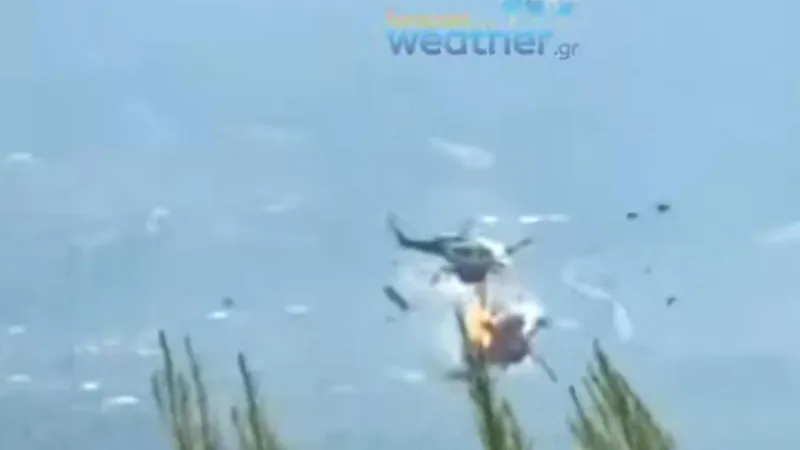
A mid-air collision between two Greek firefighting helicopters occurred west of Athens this morning during intense operations to extinguish a persistent wildfire, with authorities confirming the safe recovery of one crew. The harrowing incident unfolded as emergency services battled a formidable blaze that has threatened communities and forests in the region.
The exact circumstances leading to the collision remain under immediate investigation, but initial reports indicate the aircraft were engaged in water-dropping maneuvers over the active fire front. Emergency response teams were quickly deployed to the crash site to assess the situation and ensure the wellbeing of all personnel involved in the critical aerial assault on the flames.
This incident casts a stark light on the perilous conditions faced by crews combating the increasingly frequent and severe wildfires gripping Greece. The nation has been grappling with multiple large blazes, exacerbated by prolonged heatwaves and strong winds, which have incinerated homes and vast tracts of land. Readers can find more context on these challenges in our previous report, Athens Battles Out-of-Control Wildfire As Homes Incinerate, Winds Fuel Blazes.
Aerial firefighting is inherently dangerous, demanding precise coordination and highly skilled piloting amidst smoke, turbulent air, and often difficult visibility. The proximity required for effective water drops, especially when multiple aircraft are operating in the same airspace, significantly elevates the risk of accidents like this helicopter collision.
The Greek Civil Aviation Authority and the Fire Service have launched a comprehensive inquiry to ascertain the precise sequence of events. Investigators will examine flight data recorders, air traffic control communications, and witness testimonies to piece together how two aircraft, operating under controlled conditions, came into contact.
For now, the focus remains on the fortunate outcome for one of the crews, whose resilience and training undoubtedly played a role in their survival. Details about the other aircraft and its crew are being carefully released as confirmed information becomes available, respecting the privacy and sensitivities involved in such a critical situation.
The region west of Athens has been particularly vulnerable to wildfires this season, with local communities frequently facing evacuation orders. The commitment of Greek firefighting helicopters and ground teams has been unwavering, often working around the clock in exhausting conditions to protect lives and property.
Experts suggest that factors such as communication protocols, air space management, and the sheer number of aircraft deployed in concentrated areas during large-scale operations could be reviewed following such an incident. Enhancing safety measures for these critical assets is paramount to ensure the continued effectiveness of wildfire response.
This event underscores the immense pressure on national resources as Greece, like many Mediterranean countries, confronts the escalating threat of climate-change-fueled fires. The courage of those who pilot these Greek firefighting helicopters and work on the ground serves as a poignant reminder of the human cost involved in battling environmental crises.
As the investigation proceeds, the immediate priority for Greek authorities remains the complete suppression of the wildfire. The resilience of the emergency services and their unwavering commitment to public safety continue to be a beacon of hope amidst the devastation caused by the blazes.