 Robert Andrison
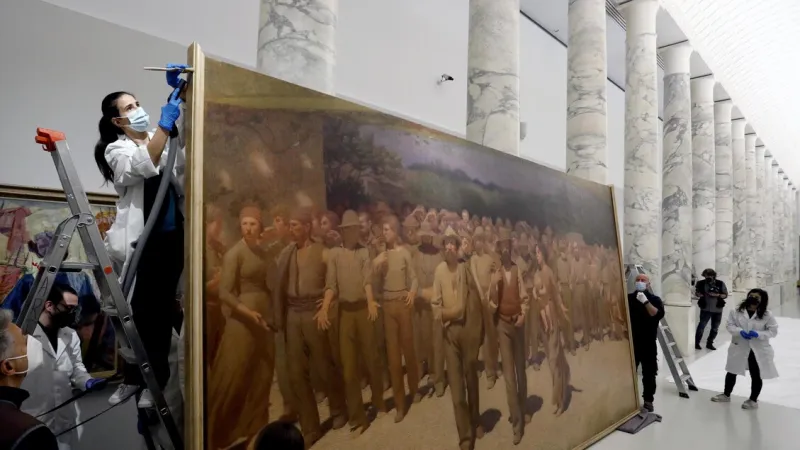
MILAN The iconic painting Il Quarto Stato by Giuseppe Pellizza da Volpedo is officially on a path toward nomination for UNESCO World Heritage status, following a significant push by the Piedmont Region. Governor Alberto Cirio affirmed the artwork's profound cultural significance, describing it as a universal symbol embodying the dignity of labor, a move poised to elevate its global recognition as of 2026.
Completed between 1898 and 1901, Il Quarto Stato portrays a resolute procession of workers advancing from a dark background into the light, symbolizing the rise of the working class. It stands as a pivotal piece of social realism in Italian art history, capturing the socio-political movements of its era with unparalleled power and empathy.
Governor Cirio, a staunch advocate for the painting's candidacy, emphasized its enduring message. "It is a universal symbol of labor dignity," Cirio stated, highlighting the artwork's relevance that transcends its historical context and resonates with contemporary global discussions on workers rights and societal equity.
The UNESCO World Heritage designation is one of the most prestigious forms of cultural recognition globally, aiming to identify, protect, and preserve sites and objects of outstanding universal value. A successful candidacy would place Il Quarto Stato among the world's most cherished cultural treasures, ensuring its protection and promoting its appreciation worldwide.
Currently housed at the Museo del Novecento in Milan, the monumental canvas has long captivated audiences with its scale and thematic depth. Its public display allows millions to witness firsthand the raw emotion and collective strength depicted by Pellizza da Volpedo.
The painting features a central group of figures, primarily men and women, with children in tow, confidently striding forward. Their determined expressions and unified movement convey a powerful sense of purpose and resilience, making it an enduring emblem for progressive social movements.
Historically, Il Quarto Stato has served as more than just a painting; it became an icon for socialist and labor movements throughout the 20th century in Italy. Its imagery has been widely reproduced and referenced, cementing its place in the collective consciousness as a testament to the struggles and aspirations of the working class.
The initiative spearheaded by the Piedmont Region reflects a commitment to celebrating its artistic heritage, given Pellizza da Volpedo's origins in Volpedo, a small town within the region. This regional advocacy underscores the local pride and the belief in the artwork's global resonance.
While Italy boasts numerous UNESCO World Heritage Sites, from ancient Roman ruins to Renaissance masterpieces, the nomination of Il Quarto Stato would mark a significant addition by recognizing a piece that distinctively champions social themes and the human condition in a modern context.
Achieving UNESCO status would not only bring increased tourism and scholarly attention to the painting itself but also enhance Italy's reputation as a custodian of diverse cultural narratives. This move parallels other recent Italian cultural initiatives, such as the Palazzo Pitti Unveils Sarmi Exhibition: a Tribute to 20th-Century Divas, showcasing a vibrant artistic landscape.
The meticulous process of UNESCO evaluation involves detailed documentation, expert reviews, and ultimately, a decision by the World Heritage Committee. Advocates for Il Quarto Stato are preparing a comprehensive dossier highlighting its universal values, integrity, and authenticity.
This push for global recognition arrives at a time when discussions around social equity and labor rights continue to be prominent worldwide. The painting's message offers a timeless reflection on these issues, making its potential UNESCO inscription particularly poignant.
Pellizza da Volpedo dedicated years to the creation of Il Quarto Stato, undertaking extensive preparatory studies and sketches to ensure the authenticity and emotional impact of his subjects. His dedication to realism and social commentary sets the artwork apart.
The candidacy also represents an opportunity for renewed educational programs centered around the painting, allowing younger generations to engage with its historical significance and artistic merit, fostering a deeper understanding of socio-economic history.
International cultural organizations and art historians are expected to lend their support to the Italian nomination, recognizing the painting's singular place in the pantheon of global art that addresses human rights and social justice.