 Edward DP Situmorang
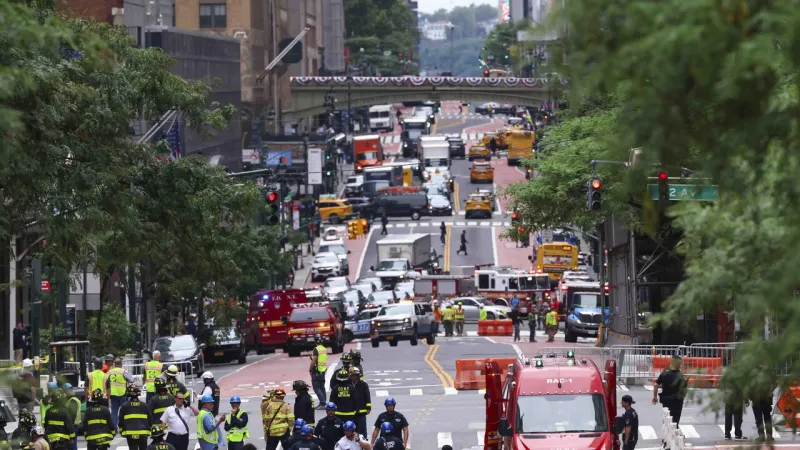
MANHATTAN - A skyscraper in a bustling Manhattan district has ignited widespread concern over its structural integrity, prompting fears of a partial collapse and plunging the surrounding area into traffic chaos. Emergency services and city officials responded swiftly to the site where visible signs of distress have been reported.
New York City Mayor Mamdani addressed the escalating situation, confirming that preliminary assessments revealed significant structural compromise. The Mayor detailed specific issues, stating, “Two columns are bent, there are cracks and signs of subsidence.” This direct observation underscores the severity of the damage affecting the high-rise structure.
Despite the visible damage and mounting public anxiety, city authorities have issued statements designed to reassure the populace. According to the municipality, expert engineers have provisionally deemed the building stable, although they anticipate “days of tension” as comprehensive evaluations continue.
The immediate vicinity of the damaged Manhattan skyscraper has been entirely cordoned off. Public safety remains the paramount concern, leading to extensive road closures and pedestrian diversions that have severely impacted daily commutes and local business operations. Traffic gridlock has become pervasive, challenging commuters who navigate through alternative routes.
Engineers are conducting meticulous inspections to ascertain the full extent of the structural damage. Their ongoing analysis will determine the necessary remediation efforts and provide a clearer timeline for resolution. This critical phase involves sophisticated monitoring equipment to detect any further shifts or deterioration.
Local residents and businesses situated near the compromised building express a mixture of apprehension and frustration. The sudden disruption has created uncertainty, affecting livelihoods and daily routines. Many are closely following official updates, hoping for a swift and safe resolution to the crisis.
The incident highlights the perennial challenges of maintaining aging infrastructure within densely populated urban environments. While the cause of the initial damage remains under investigation, the event serves as a stark reminder of the continuous need for stringent building codes and regular structural assessments in metropolises like New York.
Emergency response teams, including fire department personnel and structural engineers, have established a command center near the site. Their coordinated efforts aim to mitigate risks to both the public and responders while facilitating the detailed assessment process. Public safety briefings are being conducted regularly for stakeholders.
The long-term implications for the area could be substantial, depending on the outcome of the structural analysis. Repair work, if extensive, could take months, further impacting economic activity and transport within this vital commercial and residential hub. City planners are already considering contingency measures for prolonged disruptions.
Mayor Mamdani emphasized the citys commitment to transparency and public safety. “We are dedicating all necessary resources to ensure the safety of our residents and to swiftly resolve this situation,” the Mayor affirmed, reiterating calls for patience and cooperation from the public.
The incident serves as a critical test for New York Citys emergency preparedness protocols and its capacity to manage complex urban crises. All eyes remain on the ongoing assessments as the city grapples with the uncertainty surrounding the future of the damaged Manhattan skyscraper and its impact on the urban fabric.
Further updates are expected as engineering teams complete their detailed structural analysis and provide definitive recommendations on the buildings integrity and future viability. The city pledges to keep residents informed of every development.