 Angela Stefani
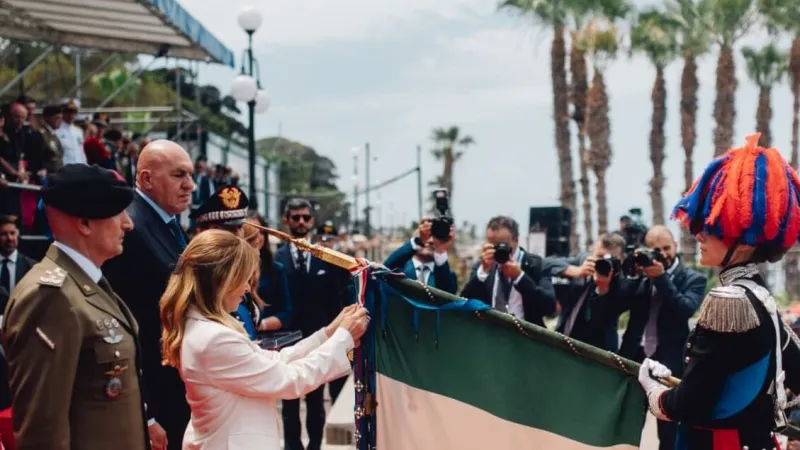
Italian Premier Giorgia Meloni announced her decision to forgo the anticipated EU-Balkans summit, opting instead to remain in Calabria for a prolonged Carabinieri ceremony. This unexpected shift in schedule prevented Meloni from participating in crucial diplomatic discussions, redirecting her focus to a significant national observance within Italy.
The premier's office confirmed that the duration of the Carabinieri event, celebrating the esteemed military police force, extended beyond original projections. This unforeseen extension necessitated her continued presence, rendering her attendance at the European summit logistically impossible.
The Carabinieri, a revered institution in Italy, holds deep historical and cultural significance, acting as both a military and civil police force. Their annual observances are considered pivotal national events, reflecting their enduring commitment to public safety and state security. Italy's Carabinieri Commemorate Founding Anniversary, drawing national attention and high-level attendance.
The EU-Balkans summit stands as a pivotal forum for discussing regional stability, economic cooperation, and the prospective integration of Western Balkan nations into the European Union. Leaders convene to address complex geopolitical challenges, foster dialogue, and strategize on shared future trajectories.
Meloni's absence from such a high-stakes gathering inevitably raises questions regarding Italy's proactive engagement in key European foreign policy initiatives. While her commitment to domestic affairs is clear, her non-attendance could be interpreted in various diplomatic circles.
Italy historically maintains a significant stake in the stability and development of the Western Balkans, given its geographical proximity and strategic interests. Rome often plays a crucial mediating role and advocates for the region's European perspective, making its top representative's presence particularly valued.
While Premier Meloni is absent, it is expected that Italy will still be represented at the EU-Balkans summit by a high-ranking official, likely from the Foreign Ministry, to ensure the nation's voice and interests are articulated in the ongoing discussions. However, the symbolic weight of a head of government remains distinct.
This incident underscores the perpetual balancing act faced by national leaders between pressing domestic commitments and critical international engagements. Such decisions often reflect a strategic prioritization of issues deemed most immediately vital to the nation's internal cohesion or political messaging.
The decision to prioritize the Carabinieri ceremony in Calabria over a major European summit may resonate differently with various segments of the Italian populace. Some may laud her dedication to national institutions and regional presence, while others might view it as a missed opportunity on the international stage.
The EU-Balkans summit occurs at a time when Europe grapples with numerous internal and external pressures, from economic shifts to ongoing security concerns. The unity and sustained dialogue among member and aspiring member states are considered paramount for collective resilience.
Leaders across Europe frequently navigate similar dilemmas, weighing the political optics and substantive outcomes of their attendance at various events. The modern political landscape demands constant assessment of where a leader's physical presence yields the greatest impact.
Despite this specific scheduling conflict, analysts anticipate that Premier Meloni will continue to vigorously pursue Italy's foreign policy objectives and engagement with the Western Balkans through other diplomatic channels and future meetings. Her office has not indicated any shift in the nation's overall stance.
Ultimately, the decision highlights the complex demands on contemporary political leadership, where national duties and international obligations often compete for a premier's finite time and attention.