 Stefani Rindus
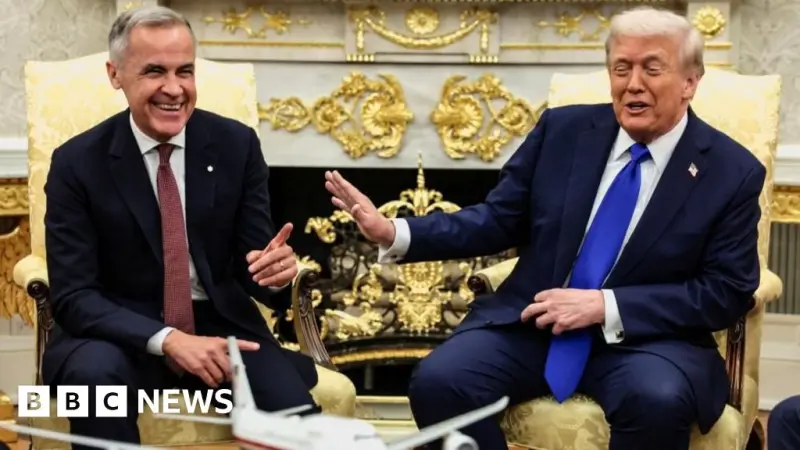
WASHINGTON — Crucial trade negotiations between the United States and Canada collapsed this week, culminating a dramatic 16-day period that saw promising momentum devolve into an irreconcilable meltdown over key economic concessions. The abrupt breakdown, confirmed by officials from both nations, casts a significant shadow over North American economic stability and marks a substantial setback for President Donald Trump’s administration and Prime Minister Justin Trudeau’s government.
The contentious discussions, initially aimed at resolving lingering disputes over agricultural subsidies, digital services taxes, and cross-border labor mobility, reached an impasse late Tuesday. Sources close to the negotiations indicated a hardening of positions from both delegations, particularly concerning the US demand for increased access to Canada’s dairy market and Ottawa’s insistence on maintaining its cultural exemptions.
What began with optimistic pronouncements two weeks prior, fueled by preliminary agreements on intellectual property rights, quickly soured as high-level meetings intensified. A senior State Department official, speaking on background, described the shift as “a rapid descent from cautious optimism to open acrimony,” largely due to evolving demands.
President Donald Trump, known for his firm stance on trade reciprocity, had repeatedly emphasized the need for a more equitable agreement for American workers and businesses. His administration signaled a zero-tolerance approach to what it perceived as unfair trade practices, intensifying pressure on Canadian negotiators to yield on critical protectionist measures.
Conversely, Prime Minister Justin Trudeau’s government faced immense domestic pressure to protect Canada's supply management system for dairy and poultry, a bedrock of its agricultural sector. Canadian trade representatives stressed the foundational importance of these policies, arguing they were non-negotiable elements of their economic sovereignty.
Beyond dairy, disputes over softwood lumber tariffs, pharmaceutical patent protections, and a proposed digital services tax by Canada became insurmountable obstacles. Each point, seemingly minor in isolation, contributed to the cumulative tension that ultimately derailed the comprehensive agreement sought by both sides.
Economists warn that the failure to secure a renewed trade framework could have significant repercussions for both economies. The integrated nature of US-Canada supply chains means increased uncertainty could deter investment, raise consumer prices, and potentially lead to job losses in sectors reliant on cross-border trade.
While both sides expressed regret over the outcome, neither offered immediate solutions or a clear path forward for resuming talks. Secretary of State Michael R. Pompeo stated, “We remain committed to fair trade, but not at any cost,” indicating a willingness to explore alternative avenues, though concrete plans remain elusive.
Canadian Minister of International Trade Mary Ng echoed similar sentiments, stating that Canada would always defend its national interests. “Our commitment to Canadian industries and workers is unwavering. We will continue to seek mutually beneficial agreements, but not compromise our core principles,” she asserted during a press conference in Ottawa.
The current impasse recalls previous periods of strained US-Canada trade relations, though observers note the current political climate presents unique challenges. The 16 days from momentum to meltdown in Canada-US trade talks underscores the volatility inherent in contemporary international negotiations, especially with protectionist sentiments on the rise globally.
Financial markets reacted with caution to the news. The Canadian dollar experienced a slight dip against the US dollar, and shares in companies with significant cross-border operations saw minor fluctuations, reflecting investor apprehension regarding the lack of a definitive trade resolution.
The breakdown leaves a vacuum of uncertainty, compelling businesses and policymakers to reassess their strategies in light of the fractured bilateral trade landscape. The immediate focus now shifts to managing the fallout and exploring whether ad-hoc agreements or a complete re-evaluation of negotiation tactics might salvage future collaboration.