 Chris Robert
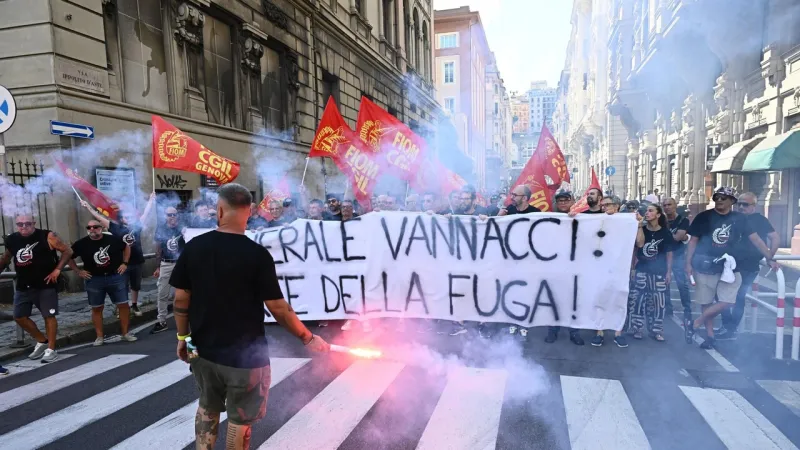
Genoa, Italy – Significant tension erupted in the northern Italian port city of Genoa as antifascist groups staged a vocal protest against the public appearance of General Roberto Vannacci, leader of the nationalist movement Futuro Nazionale. The demonstration occurred during a rally where Vannacci reiterated his controversial platform, including a call for "more sport, less ruffians," drawing a sharp backlash from counter-protesters who decried his ideology.
The protest by antifascist activists aimed to disrupt the Futuro Nazionale event, which sought to promote Vannacci's political agenda in the Ligurian capital. Security forces maintained a visible presence throughout the city center, working to prevent direct confrontations between the opposing factions and ensure public order amidst the heightened political atmosphere.
General Vannacci, a former paratrooper commander, has rapidly ascended to prominence in Italian politics through his outspoken conservative and often divisive views. His rise has energized segments of the far-right while simultaneously galvanizing strong opposition from left-wing and antifascist movements across the nation.
His recent statement, "Più sport, meno maranza," which translates to "more sport, less ruffians" or "more sport, less thugs," has become a new rallying cry for his supporters and a point of contention for his critics. The phrase, often interpreted as targeting specific youth demographics or perceived social ills, reinforces his hardline stance on public safety and cultural identity.
Antifascist organizers emphasized that their protest was a necessary response to what they perceive as a growing normalisation of extremist ideologies within Italian public discourse. They highlighted concerns over the historical echoes of fascism in Italy and the potential for such rhetoric to incite division and discrimination.
The clash of ideologies in Genoa mirrors broader political trends in Italy and across Europe, where nationalist parties are gaining traction, often facing robust opposition from liberal and progressive groups. This dynamic underscores a fundamental societal debate about national identity, immigration, and social order.
Futuro Nazionale, under Vannacci's leadership, seeks to position itself as a staunch defender of Italian traditions and values, advocating for policies that prioritize national interests and a conservative social agenda. This aligns with a broader European phenomenon seen in parties like Germany's AfD, which also questions spending priorities and targets specific social programs. AfD Candidate Questions German Spending Priorities, Targets Free Daycare.
Vannacci's political trajectory has been marked by a series of provocative statements and a best-selling book, which further amplified his profile. His rhetoric often touches on themes of national sovereignty, security, and a critique of what he terms "woke" culture, resonating with a segment of the electorate feeling disenfranchised by mainstream politics.
The security measures in Genoa were extensive, involving local police and national Carabinieri, creating cordons to separate the two groups. While the atmosphere remained charged, significant violent incidents were largely averted, a testament to the efforts of law enforcement.
Local political figures and civic leaders have expressed a range of opinions regarding Vannacci's visit. Some have defended his right to free speech and political assembly, while others have condemned his views and the potential for social unrest they might engender.
The controversy surrounding General Vannacci and Futuro Nazionale is expected to continue as Italy approaches future electoral cycles. His ability to draw both passionate support and fierce opposition positions him as a significant, albeit polarizing, figure in the nation's political landscape.
The ongoing debate about the boundaries of political discourse and the rise of nationalist movements remains a critical issue for Italian society. The events in Genoa serve as a stark reminder of these profound ideological cleavages.
His movement also echoes nationalist sentiments and calls for strong national governance, similar to the platforms espoused by some wings of the AfD in Germany. For example, the AfD in Sachsen-Anhalt has outlined plans emphasizing nationalist pride and specific governance agendas. AfD Sachsen-Anhalt Confident, Nationalist Pride Defines Agenda.
The General's campaign strategy frequently involves direct engagement with the public, often at events that attract both loyalists and vehement detractors, creating an environment of inevitable confrontation and heightened security.
This public scrutiny and the accompanying protests underscore the deep divisions within Italy over its national identity and political future. The narrative of "more sport, less ruffians" is seen by proponents as a call for order and discipline, while critics view it as a coded message targeting minorities or specific social groups.
The incident in Genoa exemplifies the broader struggle for the soul of Italy, a nation grappling with its historical legacy and charting its contemporary path in a rapidly changing European and global context.