 Robert Andrison
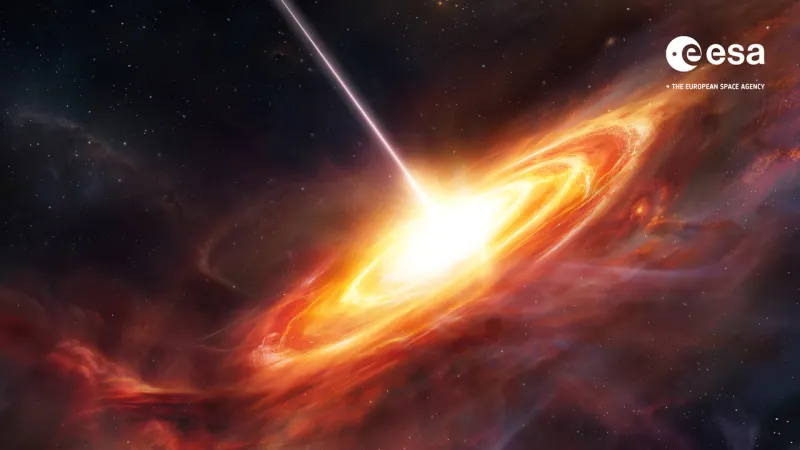
WASHINGTON — An international consortium of astronomers has announced the discovery of the most ancient quasars ever observed, revealing vibrant galactic nuclei that existed when the universe was a mere 670 million years old. This extraordinary finding pushes the boundaries of cosmic understanding, providing a critical window into the epoch of reionization and the surprisingly swift emergence of supermassive black holes in the universe's infancy.
These distant behemoths, known as quasars, are among the brightest objects in the cosmos, powered by supermassive black holes actively devouring surrounding matter at the centers of nascent galaxies. Their immense luminosity allows them to be observed across vast cosmic distances, acting as beacons from the early universe.
The age of these newly identified quasars presents a significant challenge to existing cosmological models. Scientists previously theorized that it would take considerably longer for supermassive black holes, millions to billions of times the mass of our sun, to accrete enough material to reach such sizes. This discovery suggests a more rapid growth mechanism or different initial conditions than currently understood.
Observing such remote objects requires cutting-edge astronomical instrumentation. While specific telescopes were not detailed in the initial reports, these discoveries typically rely on the unparalleled capabilities of observatories like the James Webb Space Telescope or advanced ground-based arrays, designed to capture the highly redshifted light from the earliest cosmic eras.
The light from these quasars has traveled across billions of years, stretched by the expansion of the universe into infrared wavelengths. Analyzing this ancient light allows astronomers to reconstruct the conditions of the early universe, including the composition of the intergalactic medium and the timeline of crucial astrophysical processes.
One of the most profound implications of this discovery lies in the epoch of reionization, a pivotal period when the universe transitioned from a dark, neutral state to the ionized, transparent state we observe today. The intense radiation emitted by these early quasars could have played a significant role in stripping electrons from neutral hydrogen atoms, thereby illuminating the cosmos.
Understanding how supermassive black holes grew so quickly in the young universe is a central puzzle in astrophysics. Theorists are now exploring scenarios involving massive primordial black holes, direct collapse models, or exceptionally efficient accretion processes to explain their rapid formation within the first billion years of cosmic history.
These findings also offer crucial insights into the co-evolution of galaxies and their central supermassive black holes. The observation of such active quasars at such an early stage implies a profound interplay between these cosmic structures, suggesting that the growth of central black holes and their host galaxies were intimately linked from the very beginning.
Further spectroscopic analysis of these ancient quasars will provide more detailed information on their elemental composition, accretion rates, and the dynamics of their host galaxies. Such data will be vital for refining simulations of early galaxy formation and validating or challenging current theoretical frameworks.
The implications extend beyond black hole formation, touching upon the overall structure and evolution of the universe itself. By pinpointing when and how these powerful cosmic engines ignited, astronomers are painting a clearer picture of the processes that shaped the large-scale cosmic web and paved the way for the galaxies we see around us today.
This monumental achievement underscores the relentless pursuit of knowledge in astronomy and the power of advanced technology to unveil the universe's most elusive secrets. Each distant flicker of light from these primordial quasars is a testament to the dynamic and complex origins of our cosmos.