 Edward DP Situmorang
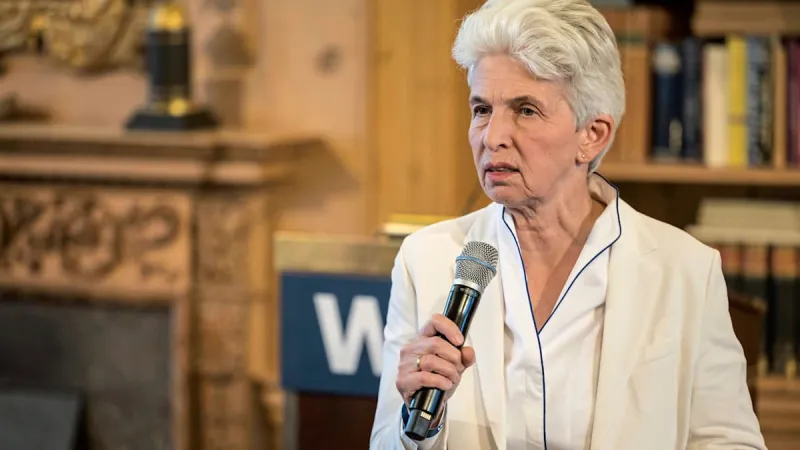
BERLIN – Marie-Agnes Strack-Zimmermann, a prominent member of Germany's Free Democratic Party (FDP) and a key voice on defense matters, has forcefully called for an immediate escalation of European support for Ukraine. She emphasized the critical need for increased air defense systems and accelerated weapons production, asserting that the current strategic approach against Russia is proving effective.
Strack-Zimmermann articulated her stance during a recent address, directly challenging any notion of wavering commitment. She insisted that European nations must collectively intensify their efforts to equip Ukraine adequately. This directive comes amidst continuous calls from Kyiv for advanced weaponry to counter Russian assaults and reclaim occupied territories.
"We should all deliver what we can so that Ukraine can protect itself now," Strack-Zimmermann stated, underscoring the immediate imperative of military assistance. Her pronouncement reflects a broader consensus within certain European political circles regarding the importance of sustained aid.
The demand for enhanced air defense capabilities is particularly salient as Ukraine continues to face relentless missile and drone attacks targeting civilian infrastructure and military installations. Effective air defense is paramount for safeguarding Ukrainian lives and preserving the nation's ability to resist.
This advocacy aligns with recent initiatives across the continent. Just recently, Europe Fortifies Ukraine: Ten Nations Launch Ballistic Missile Coalition, signaling a coordinated drive to bolster Kyiv's long-range defense needs. Such coalitions exemplify the increasing resolve among European states to contribute tangible military assets.
Beyond immediate deliveries, Strack-Zimmermann's emphasis on weapons production highlights a long-term strategic vision. European defense industries face pressure to ramp up manufacturing to meet both Ukraine's urgent demands and the continent's own rearmament needs. This ensures a sustainable supply chain for critical munitions and equipment.
Her assertion that "the strategy against Russia works" provides a confident assessment of the international community's response. This perspective suggests that the combination of sanctions, military aid, and diplomatic isolation is indeed impacting Moscow's war efforts, despite the protracted nature of the conflict.
The ongoing debate surrounding the appropriate level of support for Ukraine carries significant geopolitical weight. The conflict has redefined security paradigms in Europe, prompting nations to reassess defense spending and military alliances. The future trajectory of European security is inextricably linked to the outcome in Ukraine.
While there is general agreement on supporting Ukraine, challenges remain in coordinating efforts and overcoming logistical hurdles. Maintaining unity among diverse European nations, each with its own political and economic considerations, requires constant diplomatic engagement. However, the collective response thus far has largely demonstrated resilience.
The long-term objective of integrating Ukraine into Western security structures, potentially including NATO, also frames these discussions. Relatedly, a Coalition of Willing Signals Russia, Ukraine Eyes NATO Integration, further underscoring the strategic shift in regional alliances and security aspirations.
Strack-Zimmermann's unequivocal call serves as a potent reminder to accelerate tangible military and industrial assistance. Her voice adds to the chorus of European leaders who see continued, robust backing for Ukraine not merely as an act of solidarity, but as a crucial investment in collective European security and stability.