 Demian Sahputra
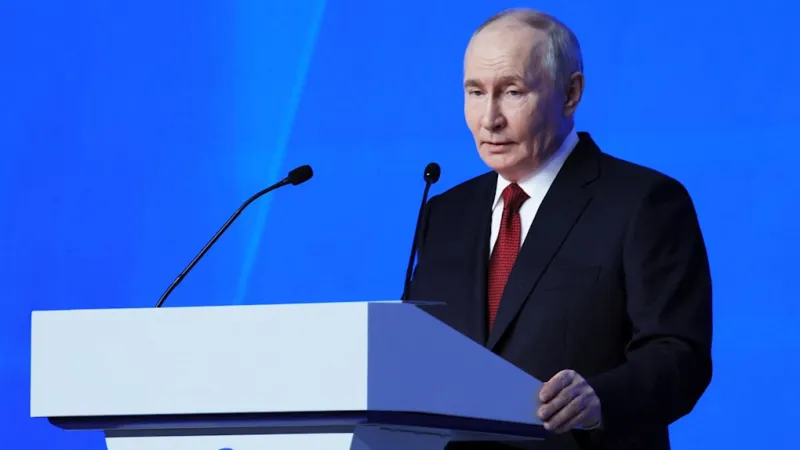
MOSCOW – Russian President Vladimir Putin publicly acknowledged the nation is experiencing a "difficult phase" during a recent conference held by the United Russia party, a rare concession from the Kremlin leader. Despite this admission, Putin concurrently vowed to uphold the security of the populace and promised future economic and infrastructure development, aiming to reassure a public grappling with ongoing geopolitical tensions and domestic challenges.
The president's remarks, made before a gathering of key political figures and party members, underscore the persistent pressures facing Russia on multiple fronts. His acknowledgment, particularly of the "difficult phase," diverges from the often-unwavering narrative of national strength, signaling a more candid assessment of the current environment. This frankness comes as the country navigates complex international relations and internal economic adjustments.
During his address, Putin reiterated the Kremlin's steadfast commitment to ensuring the safety and well-being of all Russian citizens. He emphasized that maintaining national security remains a paramount objective, particularly given the volatile global landscape. This pledge sought to assuage any anxieties regarding external threats or internal stability.
Beyond security, President Putin outlined an optimistic vision for Russia's economic trajectory. He detailed prospective initiatives aimed at fostering growth, stabilizing markets, and improving the overall living standards for Russians. These future economic advances are crucial in mitigating the impact of the acknowledged "difficult phase."
Furthermore, the president touched upon ambitious plans for infrastructure modernization and expansion. Investments in critical national infrastructure, from transportation networks to public services, are positioned as cornerstones of Russia's forward momentum, promising tangible improvements in daily life and boosting economic connectivity.
The conference served as a vital platform for the United Russia party to solidify its agenda and demonstrate unity under Putin's leadership. As the dominant political force in the country, the party plays a crucial role in implementing the president's policies and communicating the government's message to the broader public. Such gatherings are typically used to project strength and purpose.
While specific details of the "problems" were not extensively enumerated in the initial report, the context of President Putin's speech implies a recognition of multifaceted challenges. These could range from the lingering effects of international sanctions and commodity price fluctuations to demographic shifts and the ongoing need for technological self-reliance. The admission itself is a significant point for observers of Russian politics.
The admission also comes amidst an intricate geopolitical backdrop, where Russia continues to assert its influence on the world stage. Relations with Western nations remain strained, and regional conflicts persist. This dynamic environment undoubtedly contributes to the "difficult phase" mentioned by the president. Europe, for instance, has been urged to Prioritize Deterrence, Resist Russia Rapprochement, highlighting ongoing tensions. The recent Kyiv Rocked by Russian Missiles; Ukraine Retaliates in Southern Russia situation also provides context for the security concerns.
Domestically, the government faces the constant task of balancing national ambitions with the practical needs of its citizens. The pledges of economic prosperity and infrastructural upgrades are designed to resonate with ordinary Russians, who seek stability and improvement in their daily lives. The challenge lies in translating these promises into tangible realities.
Historically, such direct admissions of national difficulties from the highest echelons of Russian leadership are noteworthy. They can be interpreted as attempts to foster a sense of shared challenge and collective responsibility, rallying the population behind government policies even during times of stress. It can also be seen as an attempt to manage expectations.
This candidness stands in contrast to previous periods where official rhetoric often painted a picture of unblemished progress. While the message remains one of ultimate success and resilience, the acknowledgement of current hurdles adds a layer of realism to the state narrative.
President Putin, now in 2026, continues to be the central figure orchestrating Russia's domestic and foreign policy. His public statements are closely scrutinized both within Russia and internationally, offering insights into the Kremlin's strategic thinking and its perception of national strengths and vulnerabilities.
The coming months will reveal the extent to which these promised advancements materialize and how effectively the Russian leadership navigates the acknowledged "difficult phase." The global community will closely monitor Russia's actions and policies as it seeks to maintain its position and address internal concerns.