 Chris Robert
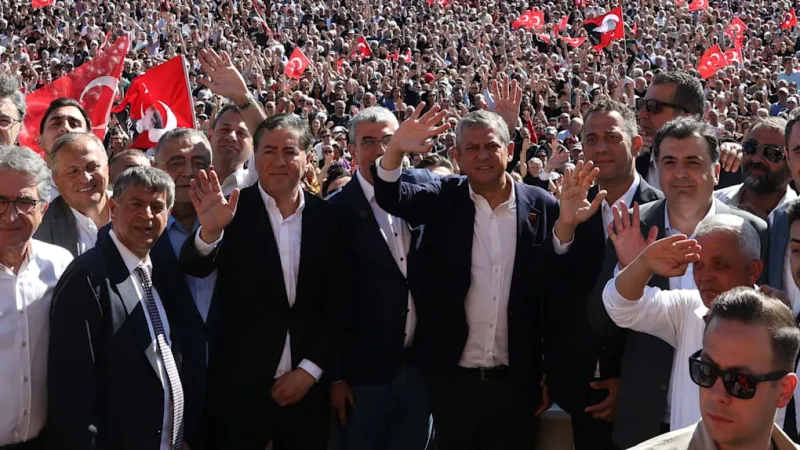
Ankara, Turkey – A recent judicial ruling to remove Özgür Özel from the leadership of Turkey's main opposition Republican Peoples Party (CHP) has ignited widespread condemnation. A collective of 262 prominent Turkish writers has denounced the action as a direct assault on fundamental democratic rights and the integrity of national elections, explicitly attributing the move to President Recep Tayyip Erdoğan's administration.
The extraordinary statement from such a large contingent of the nation's literary and intellectual community underscores escalating concerns about the state of democracy in Turkey. The writers allege that the government is systematically eroding the foundational principles of a free and fair electoral system.
The Republican Peoples Party, known by its Turkish acronym CHP, stands as Turkey's oldest political party and the primary opposition force against the ruling Justice and Development Party (AKP) led by President Erdoğan. Its leadership plays a critical role in offering an alternative political vision and holding the government accountable.
Özgür Özel, who assumed the chairmanship through an internal party election, represented a new phase for the CHP, aiming to rejuvenate its political strategy and appeal. His removal through a judicial process, rather than internal party mechanisms or electoral defeat, raises significant questions about judicial independence and political interference.
The writers collective, comprising novelists, poets, journalists, and academics, issued a strongly worded declaration, asserting that the judicial intervention into a major political party's internal affairs constitutes an "attack on elections" and a dangerous precedent for the nation's democratic future.
This incident follows a series of actions by the Erdoğan government that critics contend have tightened its grip on power and marginalized opposition voices. These include widespread purges, restrictions on media freedom, and legal challenges against political opponents.
Observers both domestically and internationally have frequently raised alarms regarding the rule of law in Turkey. Concerns often center on the judiciary's perceived susceptibility to political pressure, especially in high-profile cases involving government critics or opposition figures.
The collective outcry from Turkish writers highlights the crucial role intellectuals play in safeguarding democratic norms. Their united front seeks to draw attention to what they perceive as an ongoing attempt to subvert the electoral will and suppress dissenting political movements. This mirrors similar societal discussions globally, such as when Uwe Tellkamp Decries German Priorities, Igniting National Debate, showcasing the power of cultural figures to challenge established narratives.
The implications of such a judicial decision extend beyond the immediate leadership of the CHP. It could potentially sow distrust in the electoral system, discourage political participation, and further polarize an already divided political landscape.
President Erdoğan's administration has consistently defended its actions, maintaining that all legal proceedings are conducted in accordance with Turkish law and that criticisms often stem from politically motivated agendas. They typically assert that the judiciary operates independently.
However, the synchronized condemnation from a diverse group of intellectuals suggests a deep-seated apprehension that transcends typical political disagreements. Their statement serves as a potent reminder of the fragility of democratic institutions when challenged by executive and judicial actions.
Political analysts suggest that the removal of a major opposition leader via judicial decree could be interpreted as an attempt to destabilize the opposition ahead of upcoming electoral cycles. This strategy aims to disrupt organizational structures and undermine public confidence in opposition leadership.
The CHP has vowed to challenge the judicial ruling through all available legal avenues, asserting that the decision is unlawful and politically motivated. The party leadership maintains that internal party processes alone dictate its chairperson.
This development is likely to intensify the political struggle in Turkey, with the opposition rallying against what it views as blatant authoritarian overreach. The incident is poised to become a central theme in the national discourse on governance and democratic accountability.
The international community will undoubtedly monitor these developments closely, given Turkey's strategic importance and its ongoing relationship with Western democracies. The erosion of democratic standards often carries significant geopolitical consequences.
The collective voice of these 262 writers aims to galvanize public opinion and pressure the government to uphold the principles of democracy, including the right to free and fair elections and an independent judiciary. Their stand is a testament to the enduring power of words against perceived injustice.
As the situation unfolds, the focus will remain on the broader implications for Turkish democracy. The swift and decisive reaction from the intellectual community signals a profound concern for the nation's political trajectory and the sanctity of its democratic processes.