 Chandra Wijayanto
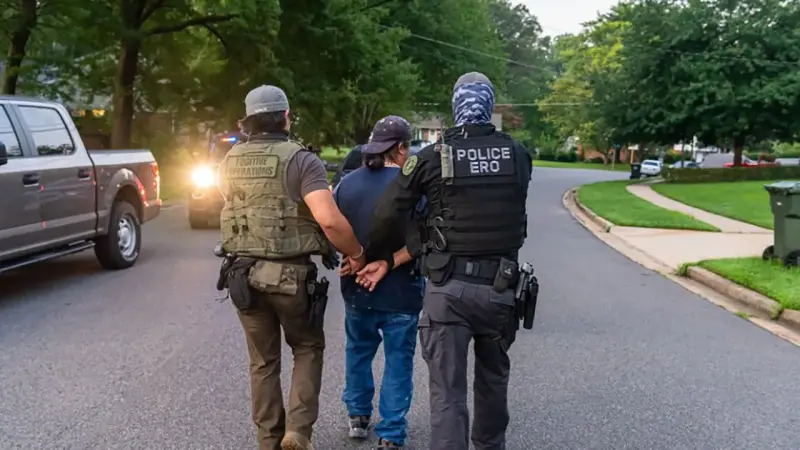
WASHINGTON — The nations top border official, referred to as the Border Czar, announced Monday that Immigration and Customs Enforcement (ICE) agents may continue their operational presence at US airports, even after Transportation Security Administration (TSA) officers are fully compensated. This declaration challenges previous expectations that ICEs role in these domestic transit hubs would be temporary, contingent upon resolved TSA staffing and payment issues.
For months, ICE personnel have augmented security and enforcement efforts at various national airports, a deployment initiated amidst concerns over potential security gaps and an ongoing federal dispute regarding TSA officer salaries and benefits. The original understanding from the administration of President Donald Trump was that ICEs involvement would scale back once the pay parity for TSA officers was achieved.
The Border Czar, speaking at a press briefing, stated, "While we commend the progress made in ensuring fair compensation for our dedicated TSA officers, the evolving landscape of national security and immigration enforcement necessitates a comprehensive and adaptable approach. We cannot afford to create vulnerabilities by prematurely withdrawing critical resources." This statement suggests a shift in strategic thinking within the administration.
This revised stance arrives as Congress finalizes appropriations to fully fund and retroactively compensate TSA officers, a measure championed by bipartisan groups to enhance morale and address long-standing wage disparities. The anticipated payment resolution was widely viewed as a signal for ICE to transition back to its primary border and interior enforcement duties.
Industry observers and civil liberties advocates have expressed a mix of surprise and concern. Many question the long-term implications of ICE maintaining a significant footprint within domestic airport environments, traditionally the purview of TSA and local law enforcement. Critics argue this expansion blurs jurisdictional lines and could lead to increased scrutiny of travelers.
A representative from the American Civil Liberties Union commented, "The expansion of ICEs presence at airports, even if initially justified by a specific operational need, risks normalizing an elevated level of immigration enforcement in spaces frequented by all Americans. This requires careful oversight and clear guidelines to protect civil rights."
Conversely, some security experts contend that a permanent or extended ICE presence could bolster counter-terrorism efforts and enhance vigilance against transnational crime. They argue that the intelligence and enforcement capabilities of ICE agents complement the screening functions of TSA, creating a more robust security layer.
President Trump has consistently prioritized national security and border integrity throughout his administration. His focus on empowering agencies like ICE to enforce immigration laws has been a cornerstone of his domestic policy, often leading to expanded roles for these agencies across various sectors.
The potential for ICE to remain indefinitely at airports raises complex questions about inter-agency cooperation, funding allocation, and the precise scope of ICEs authority within these transit zones. Discussions are expected to continue between the Department of Homeland Security, Congress, and airport authorities to define these parameters.
This development ensures that the operational dynamics at US airports will remain a key area of public interest and policy debate. Stakeholders are now preparing for what could be a permanent fixture of ICE agents in locations once seen as temporary deployment zones, underscoring a broader shift in federal security strategy.