 Stefani Rindus
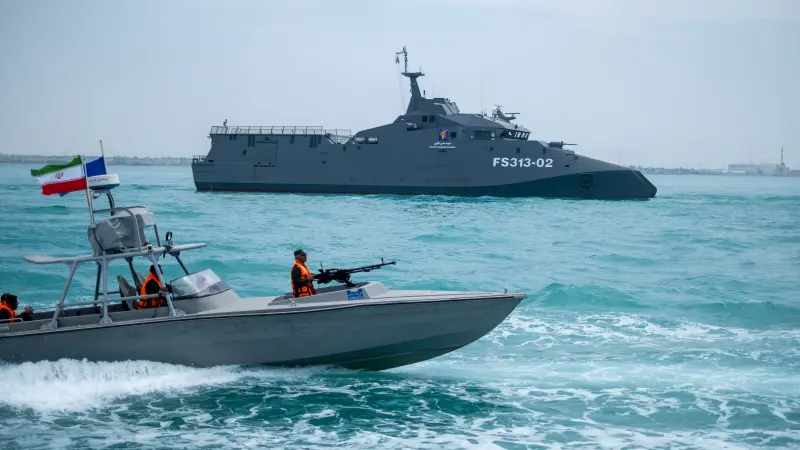
WASHINGTON — President Donald Trump convened an urgent National Security Council meeting today in the White House Situation Room, addressing a rapidly escalating crisis in the Strait of Hormuz following new provocations by Iran. The high-stakes assembly brought together top defense, intelligence, and diplomatic officials to formulate an immediate response to the renewed tensions.
The crisis intensified after reports indicated several Iranian Revolutionary Guard Corps vessels harassed and temporarily impeded the passage of two international oil tankers in the narrow strait, a critical choke point for global energy shipments. These incidents mark a significant uptick in regional instability, prompting widespread international concern.
The Strait of Hormuz is strategically vital, with approximately 20 percent of the world’s petroleum and a substantial portion of its liquefied natural gas passing through its waters daily. Disruptions here invariably send ripples through global energy markets, impacting prices and economic stability worldwide.
This latest confrontation revives memories of previous standoffs and tanker incidents that have periodically plagued the waterway, particularly during periods of heightened friction between Washington and Tehran. The Trump administration has consistently adopted a firm stance against Iranian assertiveness in the region.
Sources close to the administration, who requested anonymity due to the sensitivity of the discussions, indicated the President emphasized a “zero-tolerance” policy regarding threats to international shipping. He underscored the United States unwavering commitment to ensuring freedom of navigation in international waters.
Attendees at the urgent session included Secretary of State Michael R. Pompeo, Secretary of Defense Christopher C. Miller, National Security Advisor Robert C. O’Brien, and Chairman of the Joint Chiefs of Staff Gen. Mark A. Milley, among other key principals. Discussions reportedly focused on a range of diplomatic, economic, and military response options.
Among the options under consideration were increased naval patrols, enhanced intelligence gathering capabilities in the Gulf, and coordinated diplomatic efforts with key allies to de-escalate the situation while deterring further Iranian aggression. The possibility of targeted sanctions was also reportedly on the table.
Initial reactions from allied nations, particularly those in Europe and the Gulf Cooperation Council, expressed deep concern over the Iranian actions. Several foreign ministers called for restraint from all parties and immediate steps to safeguard the integrity of global shipping lanes.
Oil prices reacted sharply to the news, with benchmark crude futures climbing several percentage points on international exchanges. Analysts warned of potential supply chain disruptions and inflationary pressures if the crisis persists or escalates further.
Tehran has yet to issue a formal statement regarding the specific incidents. However, in past instances, Iranian officials have often asserted their right to control movements within what they consider their territorial waters and have frequently linked their actions to ongoing economic sanctions imposed by the United States.
The White House is expected to release a detailed statement later today, outlining the outcomes of the meeting and the immediate steps the administration plans to take. Military assets in the region are reportedly on heightened alert, reflecting the gravity of the situation.
Experts suggest that the renewed Hormuz crisis presents a formidable foreign policy challenge for President Trump, requiring a delicate balance between deterrence and diplomacy to prevent a wider regional conflict. The immediate priority remains securing the crucial waterway.