 Angela Stefani

TEHRAN — Iranian officials issued a stark warning today, asserting that the entire Middle East region would face a "living hell" if President Donald Trump's administration proceeds with threats to target the nation's power infrastructure, escalating already simmering tensions between Washington and Tehran. The pronouncement comes as rhetoric from both sides reaches new peaks in 2026, raising international alarm over potential widespread conflict.
State-affiliated media outlets in Tehran broadcasted the severe admonition, attributing it to unnamed senior security sources. The warnings emphasized that any direct military action against Iran's vital energy grid would be met with an immediate, disproportionate response, threatening to destabilize global energy markets and spark an uncontrollable regional conflagration.
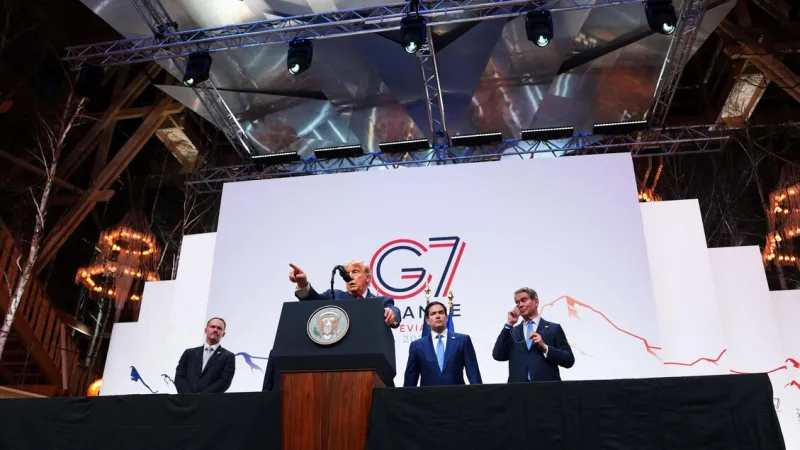
President Donald Trump, speaking from the White House recently, reiterated his administration's readiness to employ "overwhelming force" against any perceived Iranian aggression or attempts to disrupt international shipping lanes. While not explicitly naming power plants in his latest remarks, past statements from the President have alluded to targeting critical infrastructure, a stance viewed by Tehran as a clear red line.
Relations between the United States and Iran have remained deeply strained throughout President Trump's current term. Years of crippling sanctions imposed by Washington continue to severely impact Iran's economy, leading to a tit-for-tat escalation of rhetoric and proxy actions across the Gulf, from the Strait of Hormuz to Yemen.
Experts on Middle Eastern geopolitics caution that a direct military confrontation involving Iran and the United States would inevitably draw in other regional actors, including Saudi Arabia, Israel, and various non-state militias. Such a scenario, they argue, would unleash an unprecedented wave of violence, refugee crises, and economic disruption that would reverberate globally.
The international community has largely called for de-escalation, urging both Washington and Tehran to pursue diplomatic channels. United Nations Secretary-General Antonio Guterres reportedly engaged in urgent consultations with Security Council members, expressing profound concern over the escalating war of words and its potential for miscalculation.
The current standoff draws parallels to historical flashpoints, yet observers note the scale of potential devastation appears magnified in 2026. Decades of distrust and failed diplomatic initiatives have entrenched a cycle of brinkmanship, with each side perceiving the other as the primary aggressor in the volatile region.
An attack on Iranian power plants or retaliatory actions from Tehran targeting oil infrastructure in the Gulf would immediately send global oil prices skyrocketing, triggering a severe downturn in the global economy. Analysts predict widespread inflation and supply chain disruptions, impacting consumers and businesses worldwide.
Targeting power plants is considered a highly provocative act, often reserved for total warfare scenarios, due to its direct impact on civilian populations, hospitals, and basic societal functions. Iran regards such threats as an existential challenge, justifying any means necessary for defense.
Dr. Sarah Al-Mansoori, a senior fellow at the Carnegie Endowment for International Peace, commented, "The rhetoric from both sides is incredibly dangerous. While President Trump seeks to exert maximum pressure, Iran's leaders have consistently demonstrated a willingness to respond forcefully to perceived existential threats. The risk of unintended escalation is extremely high."
Despite the intense rhetoric, public diplomatic overtures remain scarce. Behind-the-scenes efforts by European and Asian powers to mediate a de-escalation have, thus far, yielded little tangible progress, leaving the region on edge as both sides appear resolute in their positions.
Beyond immediate destruction and loss of life, a conflict of this magnitude could fundamentally redraw the geopolitical map of the Middle East, empower extremist groups, and create a vacuum of power with long-lasting, unpredictable consequences for international security.