 Chris Robert

BRUSSELS — European leaders earlier this week issued an urgent and unified demand that any potential U.S. cease-fire agreement with Iran must explicitly include Lebanon, citing mounting fears of regional escalation and the destabilizing impact on the fragile Middle Eastern state. The declaration emerged from an emergency summit of European Union foreign ministers in Brussels, aimed at addressing the deepening security crisis across the Levant.
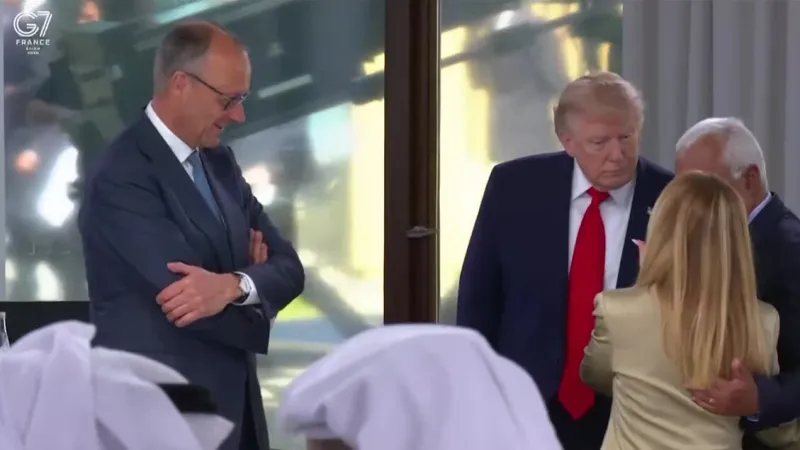
The consensus among prominent European figures, including the German Chancellor and the French President, underscored a growing anxiety within the bloc that a piecemeal approach to de-escalation would fail to contain broader hostilities. Their message, conveyed through diplomatic channels to the White House, stressed that leaving Lebanon outside the scope of such an agreement would severely undermine its effectiveness.
“Europe cannot stand by as the embers of conflict threaten to ignite a wider conflagration in our immediate neighborhood,” stated a joint communiqué released after the summit. It further emphasized that the interconnectedness of regional actors necessitated a comprehensive approach to peace, particularly concerning states with direct ties to Iranian influence.
The focus on Lebanon stems from its precarious internal political landscape and the prominent role of Hezbollah, a powerful Shiite militant group and political party backed by Tehran. European officials believe that without specific stipulations regarding Lebanon, any U.S.-Iran détente would remain incomplete and vulnerable to spoilers.
President Donald Trump’s administration has engaged in intense diplomatic efforts to mitigate tensions with Iran, particularly following a series of maritime incidents and proxy conflicts in the Persian Gulf. However, the direct inclusion of Lebanon in a cease-fire framework introduces complex layers to an already intricate negotiation process.
Diplomats speaking on background indicated that the European appeal is a direct response to intelligence assessments suggesting increased Iranian activity within Lebanon, raising fears of renewed conflict along the Israeli border. This scenario, they argue, poses a significant threat to global stability and could trigger massive refugee flows toward Europe.
The urgency of the European leaders demand that U.S. cease-fire with Iran include Lebanon highlights a strategic divergence from previous U.S. administrations, which often treated the Lebanese front as a separate, albeit related, issue. European capitals now view it as an integral component of any enduring regional peace.
Washington has yet to issue an official public response to the European proposal. However, sources close to the State Department suggest that President Trump’s foreign policy team is carefully weighing the implications of broadening the scope of any potential agreement with Tehran to such an extent.
Analysts note that incorporating Lebanon into a cease-fire would require not only Iranian assent but also significant security guarantees and potentially monitoring mechanisms involving Hezbollah. This presents substantial diplomatic hurdles, given the groups long-standing status as a U.S.-designated terrorist organization.
For European nations, the stability of Lebanon is not merely a humanitarian concern but a critical security interest. The nation serves as a vital buffer and its collapse could unleash unpredictable consequences across the Mediterranean basin and beyond. Thus, the European leaders demand that U.S. cease-fire with Iran include Lebanon is seen as a pragmatic, albeit ambitious, diplomatic maneuver.
The coming weeks will likely reveal the extent to which President Trump’s administration is willing to integrate these European concerns into its evolving Middle East strategy. The path to a lasting peace, it seems, increasingly demands a wider lens, one that extends beyond direct adversaries to encompass the full tapestry of regional actors.