 Angela Stefani
Recent state elections in Germany have cast a spotlight on the deep-seated challenges confronting the Social Democratic Party (SPD). While securing an unexpected, respectable success in parts of the Northeast, the party simultaneously endured a significant setback in Berlin, results that collectively underscore a critical, unresolved problem within the SPD as its leadership signals a continuation of its current strategy.
The mixed outcomes presented an evening of divergent emotions for party stalwarts. The positive showing in the Northeast offered a glimmer of hope, suggesting that localized campaigns and specific regional issues might still resonate with a segment of the electorate. This regional achievement provided some much-needed respite, preventing an even more dismal overall assessment for the governing party.
However, the palpable disappointment emanating from the capital, Berlin, overshadowed any northern triumph. The SPD's performance in Berlin reflected a broader trend of diminishing appeal in urban centers, where once robust support has steadily eroded. This urban decline points to a disconnect between the party's platform and the evolving priorities of metropolitan voters, a challenge that extends beyond the immediate election cycle. Analysts have also noted the highly competitive landscape in Berlin, where even the CDU faced a complex battle, as detailed in reports like Peters: Berlin's Cold Shoulder Doomed CDU State Election Campaign.
The core problem identified by observers is the SPD's apparent inability to articulate a clear, compelling vision for the future of Germany. Critics argue that the party often appears reactive rather than proactive, struggling to define its unique position within the complex landscape of federal governance and opposition demands. This lack of a cohesive narrative makes it difficult for the party to consolidate voter support across diverse demographics.
Furthermore, the perception persists that the SPD operates without a comprehensive plan to tackle pressing national issues, from economic stagnation to social cohesion. This strategic void has allowed other parties, particularly those on the fringes, to capture public attention and capitalize on voter dissatisfaction, leaving the Social Democrats struggling to regain their footing.
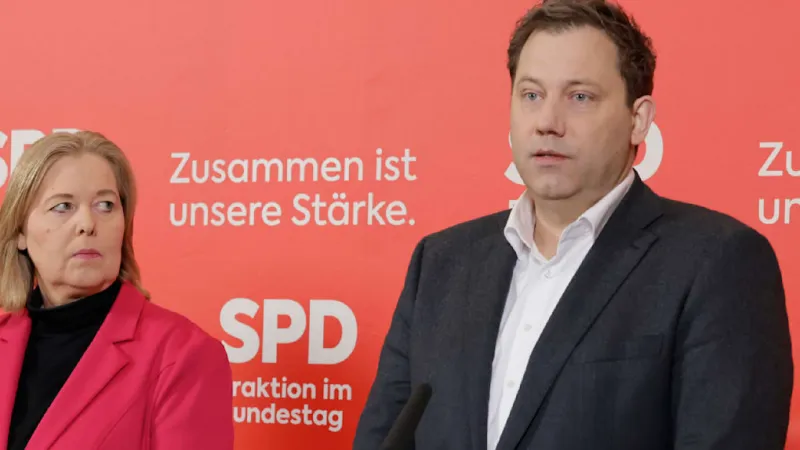
Despite these critical election insights, the prevailing sentiment within the SPD leadership, exemplified by figures like co-leader Lars Klingbeil, suggests a commitment to the established course. This inclination towards continuity, often termed a continue-as-is approach, raises questions about the party's willingness to engage in the profound introspection and structural reforms that many believe are necessary for its long-term viability.
Public and political reactions to these results have been varied. Opposition parties have seized upon the SPD's struggles as evidence of governmental disarray, while within the broader political discourse, there is an ongoing assessment of the implications for the ruling coalition. Chancellor Merz's anticipated post-election statement, for example, will undoubtedly address the broader political climate, as highlighted by articles such as Chancellor Merz to Deliver Post-Election Statement Amid Surge in Turnout.
The SPD's current predicament is not an isolated event but rather part of a longer historical trend of declining support for traditional mainstream parties across Europe. Decades of shifting political loyalties and the rise of new ideological movements have consistently challenged the Social Democrats to adapt, often with limited success.
This ongoing struggle carries significant implications for Germany's federal government. As a key partner in the ruling coalition, the SPD's internal challenges can impact governmental stability and its ability to push through critical legislative agendas, potentially leading to further political fragmentation.
The future outlook for the SPD appears fraught with difficulties if it maintains its current trajectory. Without a renewed sense of purpose and a clear strategy for addressing voter concerns, the party risks further marginalization in an increasingly dynamic political environment. The imperative for change is clear, yet the path forward remains obscured by internal inertia.
The broader German political landscape itself is undergoing significant transformation, with established parties facing increasing pressure from both the far-right and emerging populist movements. The growing influence of parties like the AfD, which increasingly sets the agenda for political debate, forces mainstream parties, including the SPD, to continually realign their strategies. This phenomenon is extensively discussed in pieces such as AfD Sets German Political Agenda, Parties Increasingly Align.
Expert analysis suggests that the SPD's options are narrowing. Some argue that only a bold, transformative agenda, coupled with a willingness to challenge established internal power structures, can reverse the party's fortunes. Others contend that the party must learn to effectively communicate its achievements in government while simultaneously re-engaging with its traditional working-class base.
Ultimately, the dilemma facing the German Social Democrats is one of identity and relevance in a rapidly changing world. The recent election results serve as a stark reminder that while electoral success can be fleeting, fundamental party problems demand consistent, decisive action rather than merely a continuation of the status quo.